 Surgical · Dental · Precision Instruments Surgical · Dental · Precision Instruments
 Global dental buyers entering 2026 face a practical question: which Dental Extracting Forceps types fit different clinical and procurement needs? The answer depends on anatomy, extraction technique, patient age, instrument design, and local quality requirements. A universal forceps may support routine anterior cases, while molar, root, cowhorn, pediatric, and surgical patterns offer more controlled access. Small details matter. Beak geometry, hinge movement, serration, handle balance, and corrosion resistance can influence chairside performance.
The World Health Organization’s Global Oral Health Status Report 2022 estimated that oral diseases affect nearly 3.5 billion people worldwide. It also reported untreated caries in approximately 2 billion permanent teeth and 514 million primary teeth. These figures show continuing demand for dependable extraction instruments, especially where restorative care remains limited. However, the report does not measure forceps consumption directly. That distinction matters for responsible market analysis.
For global purchasers, product claims should be checked against documented specifications, inspection records, and recognized quality systems. ISO 9173-1 addresses general requirements for dental extracting forceps, including functional and material considerations. ISO 13485 certification may also indicate a structured medical-device quality system, though certification alone does not guarantee clinical suitability. A polished finish is not enough. Buyers should compare working-end alignment, jaw hardness, sterilization compatibility, packaging, traceability, and after-sales support. Some catalogs still describe “universal” tools too broadly. That needs reflection. The best 2026 selection is not always the cheapest or most sophisticated; it is the most suitable, verifiable, and consistently usable for the intended clinical setting.
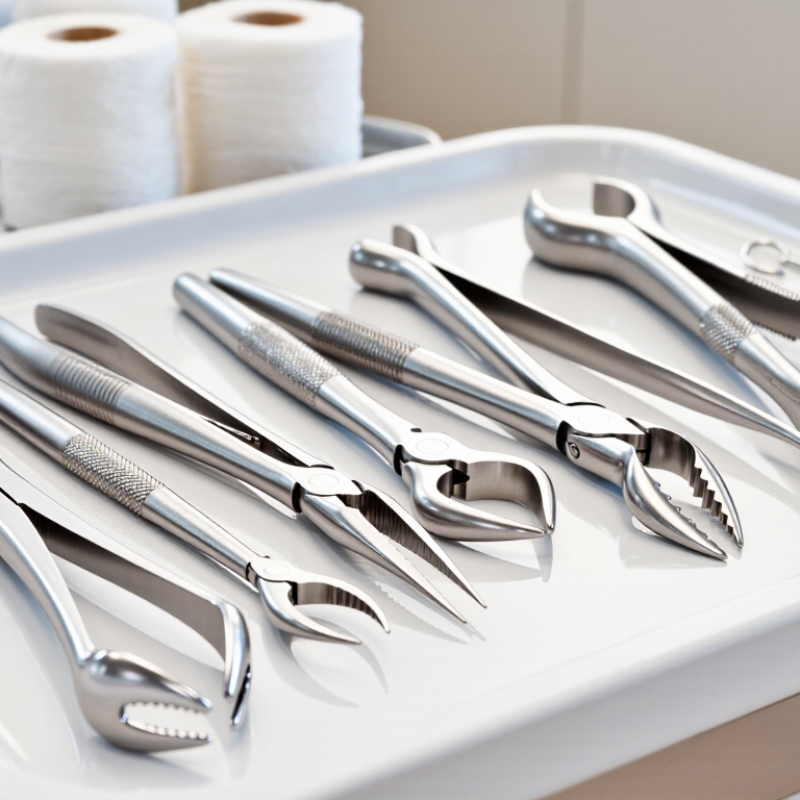
Dental extraction forceps are hinged instruments that grip a tooth and transfer controlled hand pressure into movement. Their beaks fit around the crown or root, while the handles create mechanical leverage. The operator usually applies apical pressure first, then uses gentle buccal, lingual, or rotational movements. This helps expand the socket and separate periodontal fibers. Pulling upward too early can fracture the crown or damage surrounding bone.
Forceps types match tooth shape and position. Universal forceps suit many erupted teeth. Upper molar forceps often use angled beaks for better access, while lower molar forceps commonly use stronger, opposing beaks. Root-tip forceps have narrow ends for retained fragments. Cowhorn-style designs can engage furcation areas, but they demand careful case selection and stable bone support.
The WHO Global Oral Health Status Report 2022 estimates that untreated caries affects about 2.5 billion permanent teeth worldwide. That scale creates broad demand, but instrument choice still depends on anatomy, training, and clinical assessment.
For global buyers, inspect stainless-steel quality, joint alignment, beak symmetry, surface finish, and sterilization compatibility. A smooth hinge should open without side play. Small defects matter. Packaging, traceability, and validated cleaning instructions also support reliable use.
The Global Burden of Disease 2019 study reported oral diseases among the most prevalent health conditions worldwide.
Yet forceps alone cannot replace diagnosis or surgical judgment. I would not treat a “universal” pattern as universal in practice. Some teeth resist the expected movement. That is where experience matters.
They are grouped by tooth position, crown shape, and extraction method. Incisor, premolar, molar, root, and pediatric designs serve different needs. Third-molar forceps may have deeper curves for limited access.
Upper molar forceps usually have angled beaks with clear right- or left-side orientation. Lower molar forceps often use broader beaks for direct furcation engagement. Jaw angle matters when visibility is poor.
Slim root forceps provide narrow tips for fractured crowns and retained fragments. They should not be forced into a narrow socket. Gentle control matters.
Pediatric forceps are usually smaller, lighter, and easier to control. Their spring tension should be gentle around developing teeth. Small handles help in limited spaces.
Textured handles can reduce slipping when gloves are wet. Curved handles may support wrist alignment, but excessive curvature can obstruct visibility. Serrated jaws should grip firmly without crushing fragile enamel.
Evenly aligned beaks reduce rocking, discomfort, and premature wear. The hinge should move smoothly without excessive looseness. A polished joint alone does not prove durability.
Compare beak geometry, working length, hinge stability, steel quality, and tooth compatibility. Numbering systems can differ between countries and suppliers. Ask for grip measurements, sterilization results, and inspection records.
Test samples on training models before approving large quantities. Check narrow spaces, limited opening, wet-glove handling, and repeated cleaning procedures. Catalog photographs are not enough.
No single design fits every tooth or procedure. A familiar shape can still fail when beaks mismatch the tooth. Narrower beaks may improve access but sometimes reduce control. That trade-off deserves review.
No. Proper selection still depends on diagnosis, imaging, tooth position, and clinical judgment. Forceps support the procedure, but they cannot replace careful planning. Small details matter.
This guide explains how Dental Extracting Forceps function as precision instruments for controlled tooth removal, using shaped beaks, handles, hinges, and balanced leverage to help clinicians secure the tooth while minimizing unnecessary pressure on surrounding tissues. It outlines how forceps are classified according to tooth location, anatomy, and procedure, including designs suited for anterior teeth, premolars, molars, roots, and specialized surgical situations. Readers will also learn how beak geometry, serration, handle comfort, hinge movement, material quality, and corrosion resistance influence grip, control, operator comfort, and long-term durability.
For global buyers in 2026, selecting the right forceps requires matching instrument types with clinical needs, treatment environments, and expected workloads. The article highlights practical purchasing checks such as dimensional accuracy, finish quality, ergonomics, cleaning and sterilization compatibility, packaging, traceability, quality documentation, and supplier consistency. A careful evaluation of these factors can support safer procedures, efficient instrument handling, and reliable value across different dental practices and distribution markets.