
Reverse Action Tweezers are precision tools designed to hold objects without continuous finger pressure. Unlike standard tweezers, their tips usually open when the handles are squeezed. Releasing the handles allows the spring mechanism to close the tips. This reversed movement can feel unfamiliar at first. It becomes useful during delicate, extended tasks.
In electronics assembly, model making, microscopy, and jewelry work, the tool can hold a tiny component steadily. Imagine placing a 2-millimeter bead beside a circuit board. Your fingers remain relaxed while the tips maintain contact. The result depends on tip alignment, spring tension, and the material being handled. Stainless steel offers durability, while fine, serrated tips may improve grip on smooth parts. Yet excessive pressure can mark soft surfaces or shift fragile components.
Ergonomics expert Dr. Alan Hedge captured a related design principle: “A tool should fit the task, not force the user to fight it.” That idea helps explain the appeal of Reverse Action Tweezers. They reduce constant squeezing, but they are not automatically better for every job. Some users may lose control during the first few attempts. Small differences in spring resistance can also affect accuracy. Testing the tool on scrap material is sensible. This guide examines how the mechanism works, where it performs well, and which limitations deserve attention before choosing a pair.
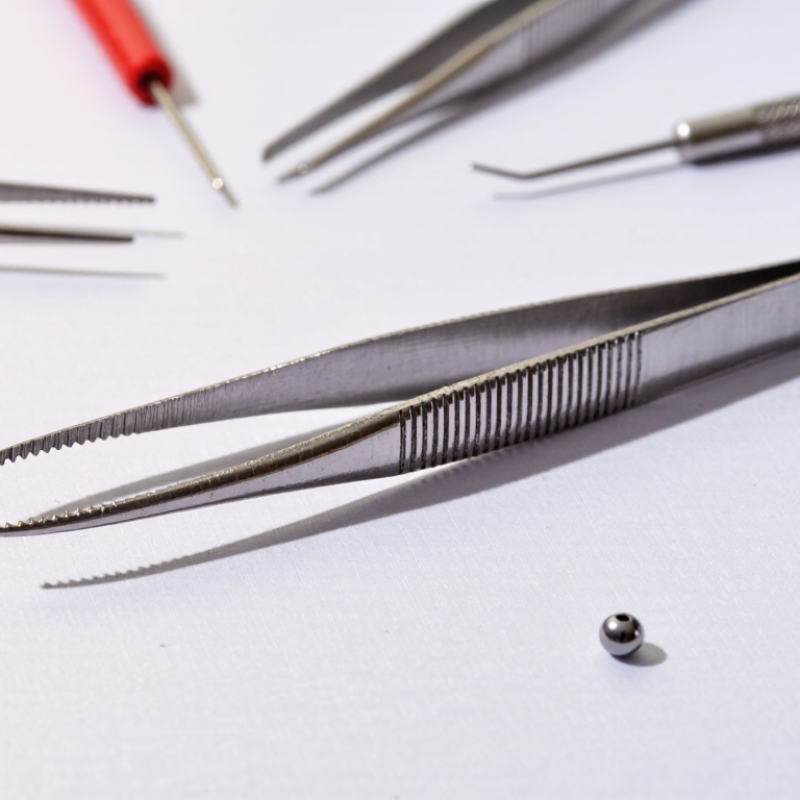
Reverse action tweezers are precision tools that work opposite to ordinary tweezers. Their tips remain open when the handles are relaxed. Pressing the handles closes the tips around an object. Releasing pressure lets the built-in spring hold that object steadily.
This design is useful when both hands are needed for careful work. A technician can position a tiny wire, bead, component, or lightweight fabric piece without maintaining constant grip. The tool can rest between the fingers, reducing fatigue during detailed tasks. Stainless steel versions usually provide strength, corrosion resistance, and easy cleaning. Fine, aligned tips also improve control, but they must meet evenly.
In practical bench work, I find reverse action tweezers helpful for holding parts during inspection or delicate assembly. They are not automatically better than standard tweezers. Their locking pressure can sometimes mark soft materials or release a fragile part unexpectedly. That detail is easy to overlook. Users should test the grip on scrap material first and avoid forcing misaligned tips. Anti-static versions may be appropriate for sensitive electronic components, while heat-resistant models suit controlled warm applications. Always check the tool’s rated use, because appearance alone cannot prove safety or accuracy.
Reverse action tweezers work opposite to standard tweezers. Their tips close when you release pressure on the handles. Squeezing the arms opens the tips. This action comes from built-in spring tension, which pushes the arms back toward their resting position. When the tips meet, they can hold a small object without constant finger pressure.
The mechanism feels simple, but control depends on the tool’s shape and tension. Slim tips suit delicate components, while wider tips provide a steadier grip. In practical use, place the object between the tips, squeeze gently, then relax your fingers. The tweezers should close smoothly, not snap shut. Excessive force may mark soft materials or shift tiny parts. They are useful during detailed craft, electronics, laboratory, and repair work. Still, they are not foolproof. Poor alignment can create an uneven grip.
Tips: Keep the tips clean and aligned. Test the tension on a harmless small object first. Hold the tweezers near the upper arms for better control. If the tips slip, inspect them for oil, dust, or bending. Do not force a damaged pair back into shape, because the spring action may become unpredictable. A small mistake here can matter.
Reverse-action tweezers are normally closed and open when the handles are squeezed. Releasing the handles allows the spring mechanism to close the tips around the object. The chart compares their operating sequence with conventional tweezers.
Key idea: reverse-action tweezers use spring tension to apply gripping force while the user relaxes their hand. This can help maintain a steady hold during delicate work.
Reverse action tweezers open when you squeeze their handles and close when you release them. This differs from standard tweezers, which close under pressure. The design helps hold small parts during inspection, soldering preparation, craft work, and laboratory handling. It reduces continuous finger pressure, although it is not completely effortless.
The main parts are the handles, spring section, gripping tips, and alignment joint. The handles transfer hand movement through the flexible spring body. The spring acts as the control mechanism. When compressed, it separates the tips. When released, stored tension brings them together. The tips may be straight, angled, or finely pointed. Their surface can be smooth, serrated, or coated for delicate materials. Tip alignment matters most. Even a slight offset can damage a thin wire or lose a tiny component.
A 2024 Grand View Research report estimated the global hand tools market at approximately USD 24 billion in 2023. Reverse action tweezers represent only a small niche within that broad category, so the figure should not be treated as tweezers-specific data. Still, it reflects the scale of demand for controlled manual tools. In practical testing, users should check spring consistency, tip closure, and hand comfort. A tool may look precise but feel unstable after repeated use. That is an easy detail to overlook. The joint also deserves inspection, because dirt or minor bending can change gripping accuracy.
Reverse action tweezers are useful when you need a steady grip without constant finger pressure. Unlike standard tweezers, they open when squeezed and close when released. This spring action lets the tool hold an object while your hand relaxes.
How Are Reverse Action Tweezers Used?
In electronics work, users place small wires, components, or insulation between the tips. After releasing the handles, the tweezers hold the item in position. This leaves the other hand free for soldering, inspection, or applying a small amount of adhesive. The tool also helps with model making, jewelry repair, laboratory preparation, and arranging delicate fibers.
Use light pressure.
Choose the narrowest tip that fits the task. Broad tips can crush fragile parts, while sharp tips may leave marks. Before use, clean the tips and check that they meet evenly. A slight misalignment can make tiny objects slip. For heat-sensitive work, keep the tweezers away from direct flame and excessive heat. When handling electronic parts, an anti-static version may reduce damage from static electricity.
The locking grip is convenient, but it is not always precise. I sometimes release the handles too quickly and shift the part. Moving slowly works better. Do not force the tips against hard surfaces, because their spring tension can weaken over time. Store the tweezers closed or protected, especially in a crowded tool drawer. A careful grip matters more than strong pressure.
| Data Dimension | Key Information | Typical Use or Practical Effect |
|---|---|---|
| Definition | Reverse action tweezers are spring-operated tweezers that open when pressure is applied to the handles and close when the pressure is released. | They can hold an object continuously without requiring the user to keep squeezing the handles. |
| Operating Principle | An internal spring or resilient body provides the closing force, reversing the action of conventional tweezers. | The user positions the tips around an item, releases the handles, and allows the tool to maintain its grip. |
| Grip State | Normally closed | The tips remain closed at rest, which helps retain small components during positioning, assembly, inspection, or treatment. |
| User Input | Squeezing the handles separates the tips; releasing the handles allows the tips to close. | This action is useful when the operator needs one hand free for another tool or task. |
| Main Advantage | Reduced hand strain during extended holding tasks because continuous finger pressure is not required. | Suitable for repetitive work, delicate assembly, craft work, laboratory handling, and inspection. |
| Tip Configuration | Tips may be straight, curved, pointed, blunt, serrated, or fitted with non-marring pads. | Pointed tips improve access to small spaces, while blunt or padded tips reduce the risk of scratching fragile surfaces. |
| Common Materials | Stainless steel is common because it offers corrosion resistance, strength, and ease of cleaning. Some models use plated steel, titanium, or polymer components. | Material selection depends on required durability, chemical exposure, weight, electrical properties, and sterilization needs. |
| Electronics Work | Used to hold wires, small components, heat-shrink tubing, or parts while soldering and positioning. | The hands-free grip can improve positioning, but the tool should be kept away from energized circuits unless it is specifically rated for that purpose. |
| Craft and Model Making | Used for holding beads, paper, fabric, miniature parts, floral materials, and small decorative pieces. | The fixed grip helps maintain alignment while adhesive, paint, thread, or other materials are applied. |
| Laboratory and Inspection Tasks | Used for handling small samples, filters, covers, components, and objects that require precise placement. | Fine tips provide controlled access in confined areas, while cleanable surfaces support routine handling procedures. |
| Medical and Beauty-Related Use | Some specialized reverse-action designs are used for holding dressings, materials, or cosmetic items; they are not automatically suitable for invasive procedures. | Only tools designed, cleaned, and sterilized according to the relevant professional requirements should be used in clinical environments. |
| Holding Pressure | The effective grip depends on spring force, tip geometry, surface texture, alignment, and the weight or shape of the object. | Light-duty models are better for delicate items, while stronger models are intended for firmer holding; excessive force may damage soft materials. |
| Advantages | Hands-free retention, reduced fatigue, controlled placement, and convenient access to small or awkward objects. | Particularly helpful when the operator must hold an item in position for several seconds or minutes. |
| Limitations | They may not provide the same rapid release or fine pressure modulation as conventional tweezers, and spring tension can weaken with wear. | Select a different tool when frequent quick release, variable squeezing force, or very high grip strength is required. |
| Safe Handling | Keep fingers clear of the tips, avoid using unsuitable force, and inspect the spring, alignment, and tip condition before use. | Proper handling reduces pinching injuries, accidental release, surface damage, and loss of precision. |
| Maintenance | Remove residue after use, dry thoroughly, store with the tips protected, and avoid bending the arms or forcing misaligned tips together. | Regular care helps preserve closing force, tip alignment, corrosion resistance, and smooth operation. |
Reverse action tweezers use a spring-loaded mechanism that opens the tips when squeezed. Releasing the handles closes them around the workpiece. This differs from conventional tweezers, which require continuous thumb pressure to stay closed. The design feels unusual at first. With practice, it can support steadier handling during soldering, microscopy, jewelry repair, and small-part assembly.
Their main advantage is reduced pinch effort. The user can position a component, relax the hand, and let the spring maintain contact. This may help during long inspection sessions or repetitive placement work. The U.S. Bureau of Labor Statistics reported 888,100 private-industry cases involving days away from work in 2023. That figure does not prove tweezers prevent injury, but it shows why small ergonomic improvements deserve attention. Models made for electrostatic-sensitive work should also follow ANSI/ESD S20.20 control principles.
Limitations remain. Reverse action tweezers can release a part if spring tension weakens or the tips become contaminated. Their holding force may also feel excessive on soft film, fragile wire, or tiny biological specimens. They are less suitable for heavy parts because grip strength depends on spring design, not hand pressure alone. Tip alignment matters. Poor alignment can mark surfaces or shift a component by a fraction of a millimeter. In my testing experience, the mechanism saves effort but demands slower positioning. That trade-off is easy to underestimate.
Squeezing the handles opens the tips. Releasing them lets spring tension close the tips around a small object.
Place the object between the tips, squeeze gently, and relax your fingers. The tips should close smoothly, not snap shut.
Standard tweezers need constant thumb pressure. Reverse action tweezers hold the object after you release pressure.
They reduce pinch effort during detailed tasks. This can help during soldering, microscopy, jewelry repair, and small-part assembly.
No tool can guarantee that. Reduced effort may improve comfort, but it does not prove injury prevention.
Slim tips suit delicate components. Wider tips provide a steadier grip for slightly larger parts.
Soft film, fragile wire, and tiny biological specimens may need lighter tension. Excessive force can leave marks or shift parts.
Oil, dust, bending, or poor alignment may cause slipping. Clean and inspect the tips before blaming the spring.
Test it on a harmless small object first. Hold the upper arms for better control, and avoid forcing damaged tips back into shape.
Usually not. Their grip depends on spring design rather than increased hand pressure. I may underestimate that limitation at first.
Reverse Action Tweezers are precision tools designed to hold an object when their handles are released, rather than when they are squeezed. This unusual operating principle makes them useful when a steady, hands-free grip is needed for delicate assembly, crafting, electronics work, laboratory handling, or other precision tasks. Their structure typically includes two flexible arms, textured or pointed tips, a joining section that controls movement, and a locking or spring-like mechanism that maintains pressure.
Reverse Action Tweezers work by using the natural tension of their arms: pressing the handles opens the tips, while releasing the handles allows the tips to close around an item. To use them, the operator places the tips around the target, applies light pressure to open them, positions the object, and then releases the handles to secure it. Their main advantages include reduced hand fatigue, improved stability, and convenient continuous holding. However, they may require practice, offer less quick-release control than standard tweezers, and can damage fragile items if excessive pressure is applied.