
Sialkot, Pakistan  |  ISO 13485:2016 & ISO 9001 Certified Manufacturer [email protected] +92-524-263953
0%

Hemostat Artery Forceps are precision instruments used to clamp vessels and manage tissue during procedures. Their small details matter: jaw alignment, serration pattern, ratchet engagement, and handle balance can shape control at the table. A polished finish looks reassuring, but appearance alone tells little about consistent performance.

This guide introduces ten manufacturers for buyers comparing product range, manufacturing experience, quality controls, and support. It also considers practical details such as stainless-steel grades, instrument sizes, straight or curved jaws, and availability of replacement or custom options. These points help procurement teams ask clearer questions and compare specifications more carefully. Not every maker publishes the same level of technical detail.

Look closely at the evidence. Request product documentation, inspect samples where possible, and confirm that stated quality systems and testing apply to the specific instruments being considered. Ask about inspection methods, traceability, lead times, and after-sales service. Small checks matter. A manufacturer’s website may present a strong first impression, yet independent verification is still useful. Rankings can simplify a crowded market, but they cannot replace a hands-on assessment or your organization’s clinical requirements. This list is a starting point, not a final verdict; even experienced buyers can miss a detail when specifications appear similar.
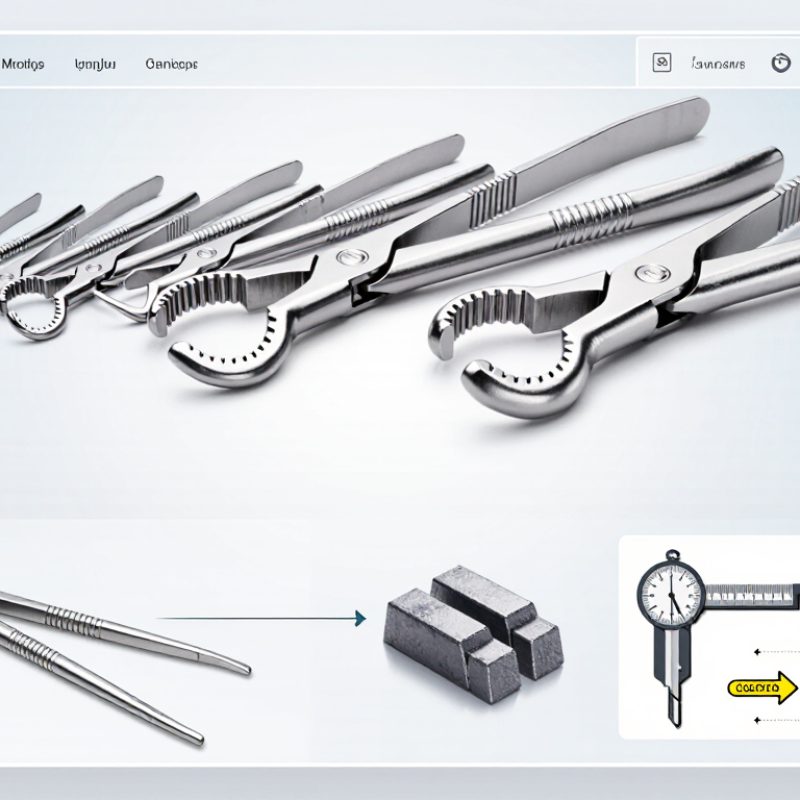
Top 10 Hemostat Artery Forceps Manufacturers

Types and Uses of Hemostat Artery Forceps

Hemostat artery forceps differ in jaw length, tip shape, and locking strength. Mosquito forceps have fine jaws for small, superficial vessels. Kelly and Crile patterns suit broader vessel control, while longer Rochester-Pean forceps can reach deeper tissue. Straight jaws help with visible targets; curved jaws can improve access around an incision. Serrations grip tissue, but excessive pressure may damage it.

Small details matter.

Selection depends on the vessel, operative field, and tissue condition. The World Health Organization’s Global Guidelines for the Prevention of Surgical Site Infection report that surgical site infections affect up to 11% of patients undergoing surgery in low- and middle-income countries. This figure is not specific to forceps, but it underlines why cleaning and sterilization instructions matter.

Inspect ratchets, jaw alignment, and serrations before use; a worn instrument may slip or crush tissue. No clamp is perfect. In practice, teams may need to reassess their choice when visibility or tissue fragility changes. Use forceps only within the training and procedure protocols established by the clinical team.

Criteria for Comparing Hemostat Forceps Manufacturers

Top 10 Hemostat Artery Forceps Manufacturers
Criteria for Comparing Hemostat Forceps Manufacturers

A useful comparison starts with the forceps themselves, not a polished catalog. Check stainless-steel specifications, jaw symmetry, tooth engagement, ratchet security, and smooth movement under light pressure. Ask how the manufacturer tests clamping consistency and corrosion resistance after repeated cleaning and sterilization. Request test methods and batch-level traceability, not just a certificate. A ratchet that slips on the third notch matters in a real procedure.

Quality systems deserve close review. ISO 13485 certification can indicate a structured medical-device quality system, but it does not prove every forceps model performs equally well. The World Health Organization’s Global Guidelines for the Prevention of Surgical Site Infection report surgical-site infection rates of up to 11% among patients undergoing surgery in low- and middle-income countries. That figure does not link infections to forceps manufacturers; it does underline why dependable instrument processing and quality control matter. Compare documented inspection procedures, sterilization compatibility, complaint handling, and corrective-action records. Ask for samples and inspect the jaws under bright light. Small gaps can be easy to miss. Even a careful evaluation has limits: a short sample check cannot reveal long-term wear, so request durability data and clear warranty terms.

Top 10 Hemostat Artery Forceps Manufacturers — Criteria for Comparison

Typical nominal lengths provide a practical starting point when comparing manufacturers’ product ranges. These representative sizes are not universal specifications; confirm exact dimensions in each product catalog. Also compare material, jaw pattern, ratchet function, finish, traceability, sterilization instructions, and applicable quality-system documentation.

Profiles of Ten Leading Hemostat Forceps Manufacturers

A close look at ten leading hemostat forceps manufacturers reveals different strengths, not one universal standard. A precision-machining maker focuses on straight jaws and even tooth engagement. A materials-led producer documents steel grades and surface finishing. Small details matter. An ergonomics-focused team tests handle balance and ratchet release. A broad-catalog manufacturer offers several lengths and jaw patterns. A customization specialist adapts dimensions for specific clinical workflows.

Other profiles highlight production and quality systems. A reusable-instrument maker should explain cleaning compatibility and inspection criteria. A high-volume producer may emphasize consistent assembly across batches. A small-batch workshop can offer closer control, though delivery capacity deserves checking. A packaging-focused supplier protects instruments from scratches and moisture during shipment. A traceability-oriented manufacturer links inspection records to production lots. These differences are useful, but catalog descriptions alone cannot verify them.

When comparing suppliers, ask for clear specifications, sample evaluation, and documented quality checks. Inspect jaw alignment under good light; test the ratchet through each position. Look for smooth movement without loose joints or sharp edges. Ask how defects are handled and whether measurements are checked routinely. A polished brochure can still leave questions unanswered. No profile is flawless. Even experienced buyers may need to revisit their assumptions after hands-on testing.

Top 10 Hemostat Artery Forceps Manufacturers - Profiles of Ten Leading Hemostat Forceps Manufacturers

Anonymized overview: the entries below are manufacturer profile archetypes, not company-specific rankings or claims. Instrument sizes and configurations are common examples; availability and exact specifications vary by manufacturer and model.

Profile Product focus Common instrument example Typical nominal length Jaw / working-end feature Common construction
Profile 01
Fine-instrument specialist
Small-vessel clamping instruments Halsted mosquito forceps About 3.5–5 in (9–13 cm) Fine, narrow jaws; straight or curved; transverse serrations Reusable stainless steel is common
Profile 02
General-purpose instrument maker
Everyday surgical hemostats Kelly forceps About 5.5–6.25 in (14–16 cm) Serrations typically extend along the distal portion of the jaws; straight or curved Reusable stainless steel is common
Profile 03
Operating-room range supplier
Standard clamping patterns in multiple sizes Crile forceps About 5.5 in (14 cm) Transverse serrations commonly run the full length of the jaw Reusable stainless steel is common
Profile 04
Heavy-pattern instrument maker
Larger, heavier clamping instruments Rochester-Pean forceps About 7.25 in (18 cm) Broad, robust jaws with transverse serrations Reusable stainless steel is common
Profile 05
Specialty pattern manufacturer
Instruments for grasping and clamping tissue or vessels Rochester-Carmalt forceps About 8 in (20 cm) Longitudinal jaw grooves with cross-serrations near the tip are typical Reusable stainless steel is common
Profile 06
Traumatic-grip pattern supplier
Forceps with toothed jaw options Kocher (Ochsner) forceps Commonly about 5.5–8 in (14–20 cm) A 1×2 tooth at the tip is a defining pattern feature Reusable stainless steel is common
Profile 07
Fine and medium hemostat range
Straight and curved general-purpose clamps Spencer-Wells forceps Commonly about 5.5–6.25 in (14–16 cm) Transversely serrated jaws; configurations vary by pattern and size Reusable stainless steel is common
Profile 08
Deep-access instrument specialist
Angled instruments for access around adjacent structures Mixter right-angle forceps Commonly about 7–10 in (18–25 cm) Narrow jaws set at an angle to the shafts Reusable stainless steel is common
Profile 09
Vascular-instrument range supplier
Vascular clamping instruments, including partial-occlusion patterns Satinsky-style vascular clamp Varies substantially by pattern and model Curved, angled jaws designed for a specific vascular clamping approach Reusable stainless steel is common; confirm the intended application and model specifications
Profile 10
Compact vascular clamp maker
Small temporary vascular clamps Bulldog vascular clamp Compact designs; dimensions vary by model Spring-action clamp; jaw shape and pressure differ across designs Material and surface finish are model-specific; verify product documentation

Buyer checks: confirm the exact pattern, jaw length, straight or curved configuration, material, sterilization instructions, applicable regulatory documentation, and inspection or quality-system records directly with the supplier.

Manufacturing Standards and Quality Controls

Reliable hemostat artery forceps depend on controlled materials, precise machining, and repeatable inspection. ISO 7153-1 describes metallic materials used for surgical instruments, while ISO 13485 provides a quality-management framework for medical-device production. Manufacturers should check jaw alignment under magnification and test ratchet engagement across multiple positions. They should also document surface finish, corrosion resistance, and dimensional results by lot. Small burrs matter.

Quality controls support patient safety, but they cannot replace validated reprocessing. The WHO’s 2022 Global Report on Infection Prevention and Control estimates that healthcare-associated infections affect about 7 in 100 patients in acute-care hospitals in high-income countries, and 15 in 100 in low- and middle-income countries. These figures are not forceps defect rates; they underline the importance of reliable infection-prevention systems. ISO 17664-1 addresses information manufacturers provide for processing reusable medical devices. Clear cleaning and sterilization instructions help facilities use instruments as intended.

Tips: Request lot-level inspection records and evidence of repeatable jaw and ratchet testing. Check that processing instructions are specific and validated. A certificate alone cannot prove every batch performs consistently; periodic fatigue testing may reveal issues routine sampling misses. No inspection plan is perfect.

Factors to Consider When Selecting a Manufacturer

When comparing hemostat artery forceps manufacturers, inspect more than the polished finish. Ask for material specifications, dimensional tolerances, corrosion-resistance test results, and lot-level traceability. Check that jaws meet evenly under light pressure and that the ratchet holds without excessive force. These small details matter during repeated handling. Request evidence of a documented quality management system, such as ISO 13485 certification, and confirm that the supplied instruments are compatible with your facility’s validated cleaning and sterilization processes. The WHO’s 2022 Global report on infection prevention and control estimated that 7 in 100 patients in high-income acute-care hospitals acquire at least one healthcare-associated infection. That figure does not measure forceps performance, but it reinforces the value of reliable reprocessing information.

Tips: Request sample instruments and inspect them under bright light. Test the box lock, jaw alignment, and ratchet engagement. Ask how complaints and corrective actions are recorded.

Compare written warranties, repair options, production capacity, and delivery consistency—not just unit price. Ask for inspection records and clear acceptance criteria before placing a larger order. A smooth sample is useful, but it cannot prove every production batch is identical. Verify documents independently, and revisit your criteria after routine clinical feedback.

FAQS

Which quality standards should a manufacturer document?

ISO 7153-1 covers metallic materials for surgical instruments. ISO 13485 describes a medical-device quality management system. Neither standard guarantees every instrument performs perfectly.

How can I check jaw alignment?

Hold the jaws under bright light and look for even contact. Test the ratchet at each position. Small burrs matter.

What material and inspection records should I request?

Ask for steel specifications, dimensional results, corrosion-resistance testing, and lot-level inspection records. Traceability helps link checks to production batches.

What should I check in a sample instrument?

Test the box lock, jaw alignment, ratchet, and handle movement. Look for loose joints or sharp edges. Not always obvious.

Can a sample prove every batch will be consistent?

No. A smooth sample cannot confirm that all production batches match. Ask about routine checks and fatigue testing; sampling can miss problems.

What information matters for reusable instruments?

Request specific, validated cleaning and sterilization instructions. Confirm they fit your facility’s established processes. Clear instructions matter.

How should I compare production and delivery capacity?

Ask about batch consistency, production capacity, and delivery records. A small workshop may offer close control, but its delivery capacity still needs checking.

What should I compare beyond unit price?

Review warranties, repair options, acceptance criteria, and complaint-handling records. Verify documents independently. I may be overlooking something, so revisit your criteria after routine feedback.

Conclusion

Hemostat Artery Forceps are essential instruments used to clamp blood vessels and control bleeding during surgical and clinical procedures. They come in different designs, lengths, jaw patterns, and locking mechanisms to suit varied tasks and levels of precision. Comparing manufacturers involves assessing product range, material selection, workmanship, reliability, customization options, and the availability of technical support. A review of ten leading manufacturers can help readers understand the range of capabilities in the field without relying on brand names alone.

Consistent manufacturing standards and quality controls are vital to ensure forceps are durable, functional, and suitable for their intended use. When selecting a manufacturer, buyers should consider the instrument specifications, material quality, production consistency, inspection processes, delivery capabilities, and after-sales service. Evaluating these factors together can support an informed choice that meets practical requirements and quality expectations.

Evelyn

Evelyn

Evelyn is a dedicated marketing professional with a strong understanding of the company’s products, services, and customer needs. With a background in market research, content strategy, and digital communication, she transforms complex product information into clear, practical, and engaging......
↑