Technical Whitepaper & Procurement Analysis
State-of-the-Art CE Certified Dental Forceps Manufacturing: An Engineering & Clinical Overview
In modern oral maxillofacial surgery and general dentistry, the anatomical precision of CE Certified Dental Forceps forms the cornerstone of atraumatic tooth extraction. Dental extracting forceps function as specialized mechanical levers designed to engage the tooth root beneath the cervical margin, expand the alveolar bone socket, and break the periodontal ligament attachments with minimal collateral soft tissue trauma. As a premier original equipment manufacturer (OEM) based in Sialkot, Pakistan—the globally recognized hub of surgical metallurgy—S.S. SURGIMED integrates classic forging craftsmanship with automated multi-axis CNC machining to deliver dental forceps and surgical clamps that surpass stringent international standards, including ISO 13485:2016, ISO 9001, and the European Union Medical Device Regulation (EU MDR 2017/745) Class I requirements.
1. Metallurgical Excellence & Microstructural Integrity
The durability, tactile feedback, and corrosion resistance of dental forceps depend fundamentally on metallurgical composition and heat treatment chemistry. At S.S. SURGIMED, we exclusively procure vacuum-melted, surgical-grade martensitic stainless steels (specifically AISI 410, AISI 420, and high-carbon AISI 440A/C variants) sourced from certified German and Japanese mills.
Metallurgical Breakdown of Surgical Steel Grades:
- AISI 420 / German DIN 1.4021 (Martensitic): Yields an optimal balance between high tensile strength and high fatigue endurance. Subjected to vacuum heat treatment to achieve a Rockwell C hardness of 48–54 HRC, preventing jaw tip splaying or deformation under severe torque.
- AISI 440C (High Carbon Martensitic): Utilized for cutting edges, scissors, and heavy-duty bone rongeurs requiring maximum edge retention and extreme hardness up to 56 HRC.
- AISI 304 / 316L (Austenitic Stainless Steel): Non-magnetic grade designated for hospital holloware, tray systems, and non-bearing components due to exceptional chromium-nickel oxidation resistance against harsh enzymatic detergents and chemical sterilants.
To ensure complete immunity against intergranular corrosion, pitting, and stress-corrosion cracking during repeated steam sterilization at 134 °C (2.1 bar pressure), all forged blanks undergo ultrasonic cleaning and chemical passivation in strict accordance with ASTM F86 and ASTM F1089 standard practices. This process strips free iron particles from the alloy surface, forming a self-healing chromium oxide oxide passive layer ($Cr_2O_3$) with a minimum thickness of 2–3 nanometers.
2. Biomechanical Jaw Geometry & Anatomic Fit
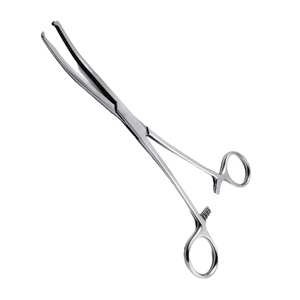
Unlike generic pliers, CE-marked dental forceps feature beak architectures mathematically contoured to match specific tooth root morphology. The forceps leverage ratio is calibrated to convert manual squeeze force into controlled sub-gingival grip without crushing the clinical crown.
Maxillary (Upper) Forceps
Engineered with straight or bayonet-curved shafts. Beaks for upper molars incorporate a pointed trifurcation tip on the buccal blade to lock securely into the buccal root bifurcation, alongside a smooth, rounded palatal blade.
Mandibular (Lower) Forceps
Designed with a right-angle (90°) hinge-to-beak orientation. Lower molar forceps (e.g., Cowhorn No. 23 patterns) feature dual pointed beaks that squeeze deep into the mesial and distal root bifurcations, elevating the tooth via mechanical wedge action.
Atraumatic Root Tip Forceps
Equipped with ultra-narrow, longitudinal micro-grooved parallel beaks. Designed to contact retained roots deep within the periodontal pocket, eliminating alveolar bone plate fracture during socket preservation procedures.
Industry Forecast 2025–2030
Global Procurement Trends in Dental Forceps & Surgical Instrumentation
The global medical device market is undergoing significant restructuring driven by regulatory compliance, hospital infection control mandates, and supply chain consolidation. Procurement directors, medical device distributors, and dental depot buyers must adapt to four dominant procurement trends:
Trend 1: Mandate for EU MDR 2017/745 Compliance & UDI Traceability
The European Union's transition from MDD to MDR has drastically heightened documentation burdens. European importers can no longer accept uncertified instruments without a verified Authorized European Representative (EC REP) and registered Unique Device Identification (UDI) Data Matrix codes etched onto each instrument body. S.S. SURGIMED supplies fully traceable, UDI-laser-etched dental forceps complete with Technical Files, Declarations of Conformity, and active EUDAMED registration.
Trend 2: Shift Toward Ergonomic Feather-Weight & Anti-Fatigue Designs
Clinician health has become a critical product selection variable. Repetitive strain injuries (RSI) and carpal tunnel syndrome among dental surgeons have increased demand for forceps featuring knurled lightweight handles, hollowed core shanks, and balanced weight distribution. Modern ergonomic handles reduce thumb pinch forces by up to 35%, providing tactile sensitivity during complex extractions.
Trend 3: Hybridization of Single-Use vs. Premium Reusable Instruments
While hospital operating rooms maintain reusable stainless steel forceps due to superior life-cycle ROI, emergency rooms, field military clinics, and mobile dental units are rapidly expanding single-use instrument inventories. Suppliers capable of offering both sterile-packed single-use variants (gamma-irradiated) and lifetime-guaranteed autoclavable reusable lines hold a decisive competitive advantage in GPO contract bidding.
Trend 4: Custom OEM Branding & Direct Factory Contract Manufacturing
Distributors are disintermediating middle-tier brokers to partner directly with certified manufacturing plants in Sialkot. Direct OEM collaboration enables customized handle laser branding, proprietary tooth profile modifications, tailored packaging (blister cards, cassette trays, IFU inserts), and reduced unit procurement costs by 25% to 40%.
Manufacturing Advantage
Why Global Healthcare Brands Partner With S.S. SURGIMED
Located in Sialkot, Pakistan, S.S. SURGIMED represents decades of industrial manufacturing mastery. We combine regional forging traditions with modern quality control frameworks to support healthcare distributors across Europe, North America, the Middle East, and Asia-Pacific.
1. Complete Vertical Integration
From raw forging die production and CNC milling to vacuum heat treatment, electro-polishing, and cleanroom packaging—100% of manufacturing operations take place inside our facility. This complete oversight preserves batch uniformity and batch-to-batch repeatability.
2. Rigorous 8-Stage Quality Assurance
Every single forceps passes an exhaustive 8-stage inspection route. Hardness is verified using Rockwell testing, corrosion resistance is validated via boil-and-autoclave testing, and jaw alignment is inspected under optical comparators.
3. Turnkey OEM & Private Label Programs
We provide comprehensive private label services, including fiber laser logo marking, customized reference catalog numbering, UDI barcode printing, custom color-coded silicone handles, and retail box packaging tailored to your brand identity.
The S.S. SURGIMED 8-Stage Production Flow
Stage 1: Die Forging & Steel Inspection
Stage 2: CNC Machining & Serration Milling
Stage 3: Hand Setting & Box-Lock Alignment
Stage 4: Vacuum Hardening & Tempering
Stage 5: Multi-Step Grinding & Satin Polishing
Stage 6: Ultrasonic Passivation & Cleaning
Stage 7: Laser UDI Marking & Optical QC
Stage 8: Sterile Pouching & Export Shipping