 Surgical · Dental · Precision Instruments Surgical · Dental · Precision Instruments
 Manufactured from premium German and Japanese stainless steel alloys, hardened to precise HRC standards, and passivated for maximum autoclavable longevity.
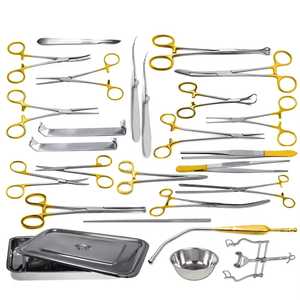
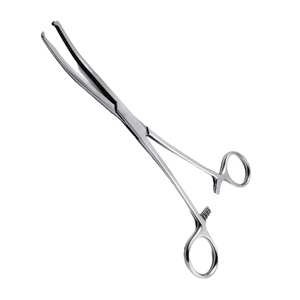
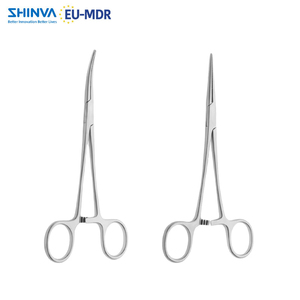
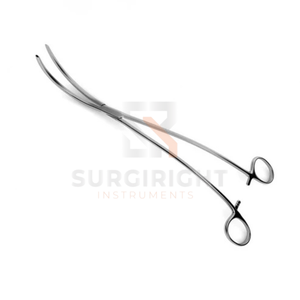
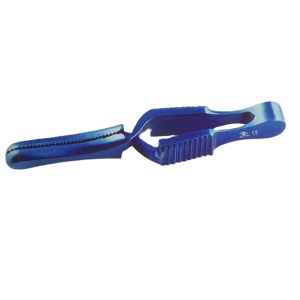
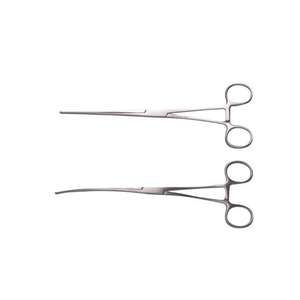
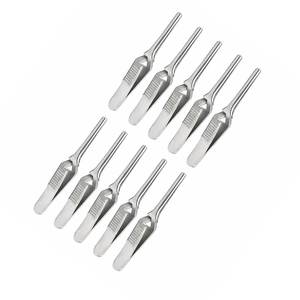
An in-depth technical analysis of structural metallurgy, clamping forces, and corrosion control in micro-vascular and general hemostasis.
In modern operative surgery, hemostatic forceps are subjected to rigorous mechanical stress, cyclic steam sterilization at 134 °C, and aggressive chemical enzymatic detergents. As a premier manufacturer located in the historic surgical instrument cluster of Sialkot, Pakistan, S.S. SURGIMED engineers hemostatic clamps using premium martensitic stainless steel grades, primarily AISI 410, AISI 420, and AISI 440.
The choice of martensitic alloys provides high carbon content for achieving optimal Rockwell hardness (HRC 44–48) post vacuum heat treatment. This exact hardness threshold ensures that the ratchet interlocking mechanism maintains structural elasticity without experiencing tooth wear or micro-deformation during prolonged surgical procedures. Meanwhile, non-cutting handles and hospital holloware are forged from high-grade austenitic AISI 304 and 316 stainless steels, optimizing ductility, corrosion resistance, and chemical stability.
Information Gain Insight: The tensile yield strength of cold-worked AISI 420 martensitic steel prevents "jaw flaring"—a common structural defect in low-tier hemostats where tip occlusion fails under high ratchet tension. Our vacuum furnace heat treatment produces a homogeneous martensitic grain structure that maintains tip alignment within ±0.02mm tolerances across 1,000+ autoclave cycles.
Hemostasis relies on uniform tissue compression to occlude severed blood vessels without causing irreversible vascular wall necrosis. The occlusion pressure exerted by Kelly, Crile, and Halsted-Mosquito forceps is governed by the mechanical advantage of the box lock hinge and lever arm length ratios.
Our engineering framework integrates double-tooth interlock ratchets calibrated to deliver progressive clamping force. The transverse serrations cut into the jaw faces are precision-milled using multi-axis CNC technology, producing crisp 90-degree apex angles that interlock precisely with opposite serrations. This geometric accuracy prevents lateral tissue slippage while reducing the total compressive force required for vascular occlusion.
Forged from solid bar stock under high-tonnage friction screw presses, aligning steel grain flow along the primary stress vectors of the instrument shanks.
Ultrasonic cleaning combined with citric acid passivation builds an enriched passive chromium oxide (Cr2O3) layer resistant to pitting and intergranular corrosion.
Direct part marking (DPM) via high-precision fiber lasers produces high-density 2D DataMatrix UDI codes fully compliant with EU MDR 2017/745 and US FDA rules.
Comprehensive metallurgical specs and regulatory compliance benchmarks for hospital buyers and procurement officers.
| Specification Parameter | Martensitic Surgical Grade (Jaws/Ratchets) | Austenitic Grade (Holloware & Handles) | Titanium Micro-Series |
|---|---|---|---|
| Raw Material Alloys | AISI 410, AISI 420 (X20Cr13), AISI 440B | AISI 304, AISI 316L (X2CrNiMo17-12-2) | Ti-6Al-4V (Grade 5 Medical Titanium) |
| Hardness Values | 44.0 – 48.0 HRC (Rockwell) | 85.0 – 95.0 HRB (Rockwell) | 32.0 – 38.0 HRC |
| Corrosion Resistance Protocol | ASTM A967 Citric Passivation / Boiling Water Test | ASTM A967 & Salt Spray Test (ASTM B117) | Native Anodized Oxide Layer |
| Sterilization Threshold | Autoclavable at 134°C (273°F) @ 2.1 bar | Autoclavable at 134°C (273°F) @ 2.1 bar | Autoclavable at 134°C / Gamma Irradiation |
| Regulatory Standards | CE Mark Class I, ISO 13485:2016, ISO 9001 | CE Mark Class I, EUDAMED Registered | CE Mark Class I, ISO 13485:2016 |
| Traceability Marking | Laser UDI DataMatrix, Lot Number, Brand Logo | Laser UDI DataMatrix, Lot Number | Color-Coded Anodized UDI Marking |
Strategic insights for hospital group purchasing organizations (GPOs), medical device importers, and OEM brand owners.
Global medical device procurement is undergoing a paradigm shift. Hospital systems across Europe and North America are prioritizing suppliers capable of demonstrating end-to-end supply chain transparency, raw material mill-test certification, and seamless regulatory compliance under EU MDR (Medical Device Regulation 2017/745).
Future-ready procurement mandates that every individual hemostatic forcep carry a permanent UDI (Unique Device Identification) code capable of enduring 500+ commercial wash-disinfector and steam sterilization cycles. S.S. SURGIMED integrates state-of-the-art fiber laser etching to apply micro DataMatrix codes without compromising the underlying protective chromium oxide passive layer, enabling hospitals to automatedly track instrument usage, maintenance cycles, and CSSD sterilization logs.
Environmental sustainability imperatives are reshaping hospital tender requirements. While single-use disposable hemostats gained traction due to initial infection control fears, life-cycle assessment (LCA) studies demonstrate that high-durability reusable forceps manufactured from surgical-grade German stainless steel reduce medical waste weight by over 82% and lower long-term cost-per-procedure by up to 64% over a 5-year operational window.
By providing a lifetime functional guarantee on all reusable operating room instruments, S.S. SURGIMED equips global distributors with high-margin, sustainable product lines that fulfill international environmental, social, and governance (ESG) healthcare criteria.
Surgical demands for longevity have accelerated the adoption of Tungsten Carbide (TC) jaws for needle holders and hemostatic clamps. TC jaw inserts offer a Vickers hardness exceeding 1500 HV, effectively eliminating wear on grasping serrations and extending active service life by up to 500%. Additionally, black titanium nitride (TiN) physical vapor deposition (PVD) coatings are increasingly specified for neurosurgical and ophthalmic procedures to eliminate anti-reflective glare under high-intensity operating theatre lighting.
Decades of master craftsmanship fused with automated quality control systems in Sialkot, Pakistan.
We provide complete private labeling services, including customized laser branding, tailored catalogue numbers, customized box packaging, and multi-lingual Instructions for Use (IFU) inserts tailored to your market requirements.
Our quality management system is audited for international compliance. We hold active CE marking for Class I medical instruments, complete with European Authorized Representative (EC REP) coverage and EUDAMED registration.
Every heat lot undergoes raw material spectro-analysis, hardness verification, boiling test for surface passivation, and optical comparator alignment checks before shipping release.
Direct technical answers regarding raw material certifications, order volumes, OEM branding, and regulatory compliance.
We forge surgical forceps from certified German and Japanese martensitic stainless steel grades, such as AISI 410, AISI 420, and AISI 440. These alloys allow precise heat treatment to achieve 44–48 HRC hardness, ensuring sharp jaw serrations and durable ratchet engagement. Austenitic AISI 304 and 316 grades are utilized for hospital holloware, trays, and non-stress structural components to maximize corrosion resistance.
Yes, we specialize in comprehensive OEM programs. We execute laser marking of custom distributor logos, specific catalogue reference numbers, LOT batch numbers, and UDI DataMatrix 2D codes. Furthermore, we provide customized retail packaging, sterile pouching solutions, color-anodized titanium handles, and multi-lingual IFU inserts approved for immediate regulatory distribution.
Our facility operates under certified ISO 13485:2016 and ISO 9001 Quality Management Systems. Every export shipment includes standard Certificates of Conformity (CoC), material heat lot mill certificates, passive film integrity reports, Free Sale Certificates (FSC), and full technical documentation registered under EUDAMED with an appointed Authorized European Representative (EC REP).
For standard catalogue instrument patterns, trial orders start from as low as 10 pieces per pattern. Repeat production runs ship within 15 to 25 working days. New custom OEM patterns requiring new forging dies or dedicated CNC programming typically require 4 to 6 weeks, inclusive of sample approval and First Article Inspection (FAI) reports.
All reusable surgical instruments manufactured by S.S. SURGIMED are fully passivated and electro-polished to withstand repeated steam autoclaving cycles at 134 °C (273 °F) at 2.1 bar pressure. We provide a lifetime functional guarantee against material flaws, jaw misalignment, and manufacturing defects under standard clinical handling and reprocessing protocols.
Streamline your medical device supply chain with ISO 13485 certified quality, factory-direct wholesale pricing, and full OEM support from Sialkot's premier surgical exporter.