 Surgical · Dental · Precision Instruments Surgical · Dental · Precision Instruments
 Engineered for atraumatic root detachment, periodontal ligament cleavage, and controlled mechanical levering. Forged from high-tensile martensitic stainless steel with custom handle ergonomics.
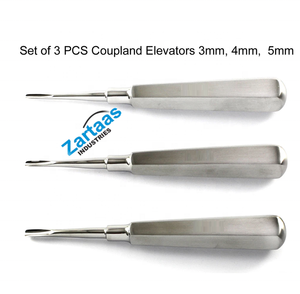
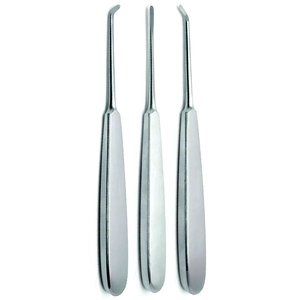
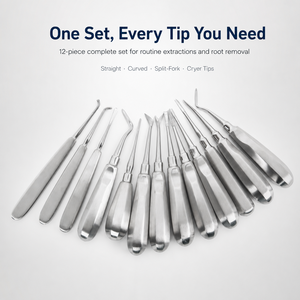
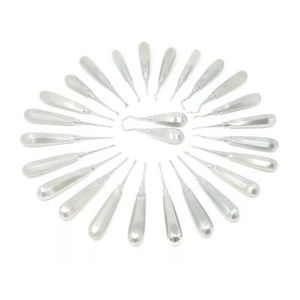
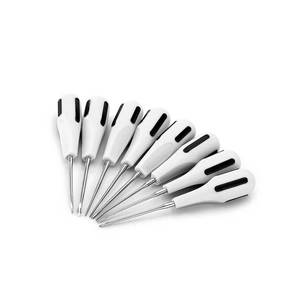
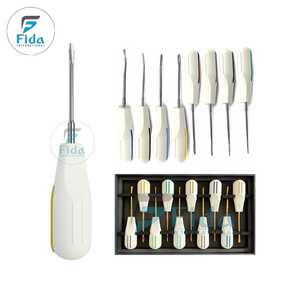
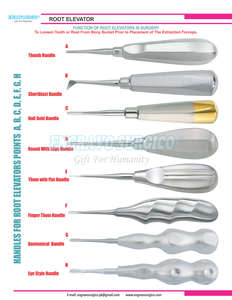
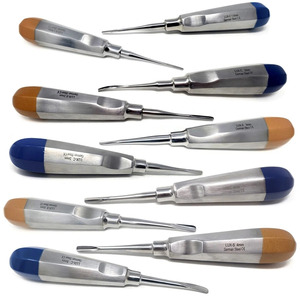
In modern oral surgery and periodontics, the root elevator is not merely a manual extraction tool; it is a high-precision biomechanical instrument engineered to execute controlled tissue detachment and luxation while preserving alveolar bone integrity. As a premier China root elevators manufacturer and supplier, our engineering paradigm integrates advanced metallurgical science, computer-controlled precision machining, and ergonomic functional design to meet the rigorous demands of global dental distributors, hospital purchasing networks, and private label brand owners.
“The fundamental objective of modern exodontia is atraumatic tooth extraction—minimizing lateral expansion force on the alveolar socket wall while severing periodontal ligament fibers with surgical absolute precision.”
Root elevators function via three classic mechanical principles: the Lever Principle (first-class lever dynamics), the Wedge Principle, and the Wheel-and-Axle Principle. The micro-engineering of the blade tip directly governs how efficiently these forces translate into root socket luxation without risking root fracture or cortical plate collapse.
Designed with optimized shank-to-handle ratios. The alveolar crest acts as the fulcrum, translating minimal hand force into significant upward axial displacement of the root.
Ultra-tapered blade profiles insert vertically along the periodontal ligament space, expanding the socket through uniform hydraulic and mechanical wedge expansion.
Triangular blade elevators (e.g., Cryer and Winter patterns) utilize rotational torque around the long axis to lift deeply embedded, fractured root tips effortlessly.
The structural integrity of a dental elevator depends entirely on the chemical composition of the stainless steel alloy and the precision of the subsequent heat treatment cycle. We forge our surgical instruments exclusively from premium medical-grade martensitic stainless steel imported from certified mills (German DIN standards and Japanese AISI equivalents).
| Steel Alloy Grade | Chemical Composition | Target Hardness (HRC) | Primary Clinical Application | Corrosion & Autoclave Resistance |
|---|---|---|---|---|
| AISI 420 / DIN 1.4021 | Cr 12-14%, C 0.15-0.25%, Mn ≤1% | HRC 50 – 54 | Standard Root Elevators (Bein, Coupland, Flohr) | High passivation resistance against repeated steam autoclaving at 134°C. |
| AISI 440C / DIN 1.4125 | Cr 16-18%, C 0.95-1.20%, Mo 0.75% | HRC 54 – 58 | Micro-Tapered PDL Luxating Blades & Sharp Apex Elevators | Superior edge retention and extreme torque resistance under high bending forces. |
| AISI 304 / 316 (Austenitic) | Cr 18%, Ni 8-10% | Non-hardened (N/A) | Hollow Anatomic Handles & Surgical Trays | Maximum chemical resistance against acidic passivation agents and enzymatic cleaners. |
Operating with strict adherence to ISO 13485:2016 and ISO 9001 quality management systems, our manufacturing facility controls every stage of production internally—eliminating cross-contamination risks and dimensional inconsistencies:
 ISO 13485:2016 Certified
 ISO 9001 QMS
 CE Class I Compliance
 EUDAMED Registered
 EC REP Authorized
As dental surgery shifts rapidly toward immediate implant placement and minimally invasive exodontia, the specifications for root extraction instruments are evolving.
Traditional heavy-torque elevators are increasingly giving way to fine-bladed Periodontal Ligament (PDL) luxators. Dental procurement managers are directing orders toward knife-edged, razor-thin blades designed for axial cutting rather than heavy levering, preserving socket walls for immediate implant therapy.
Future OEM procurement trends highlight Titanium Nitride (TiN) and Diamond-Like Carbon (DLC) physical vapor deposition coatings. These gold and black ceramic coatings increase tip surface hardness to >70 HRC, dramatically reducing blade friction and wear during bone contact.
Practitioner fatigue and repetitive strain injury (RSI) concerns are driving demand for hollow, large-diameter anatomic handles (10mm–12mm). Manufacturers utilizing micro-welded hollow handles achieve optimal tactile sensitivity while reducing overall instrument weight by up to 35%.
Global healthcare procurement offices are bypassing trading intermediaries in favor of direct contracts with ISO-certified manufacturers in China and Pakistan. Demand for full material traceability (mill test certificates) and UDI barcode matrix scanning is now mandatory for EU and US tenders.
Clear, direct responses from our engineering and export compliance team regarding wholesale sourcing, OEM branding, and quality verification.
We forge working elevator tips from high-grade martensitic stainless steels, primarily AISI 420 (DIN 1.4021) and AISI 440C (DIN 1.4125), imported from certified European and Japanese mills. These grades provide the ideal balance of high tensile strength, extreme torque resistance, and edge retention. For handles and non-cutting components, we utilize corrosion-resistant austenitic AISI 304/316 steel.
We provide full turn-key OEM and ODM manufacturing services. This includes precision fiber-laser marking of your company logo, custom SKU catalogue numbers, LOT batch tracking numbers, and 2D UDI DataMatrix codes. Additionally, we manufacture custom color-coded anodized aluminum or silicone handles, custom retail box packaging, blister packaging, and multilingual IFU (Instructions for Use) documentation tailored to your target market.
Our quality management system is fully certified to ISO 13485:2016 and ISO 9001. All Class I dental instruments carry CE marking under European Medical Device Directive / Regulation guidelines, supported by an appointed Authorized European Representative (EC REP) and registered in the EUDAMED database. Each bulk shipment includes a Declaration of Conformity (DoC), Certificate of Analysis/Material Mill Test Report, and Passivation Cleanliness Certification.
For standard catalogue elevator patterns, our minimum order quantity starts from 10 pieces per pattern for initial evaluation orders. Repeat OEM production runs typically ship within 15 to 25 working days. Custom newly designed toolings or OEM patterns require 4 to 6 weeks, which includes sample creation, 3D coordinate inspection, and first article approval.
Yes. All reusable instruments undergo thorough electropolishing and chemical citric acid passivation. They are rated to withstand repeated steam autoclave sterilization cycles at temperatures up to 134°C (273°F) and pressures of 2.1 bar without surface pitting, discoloration, or joint degradation. We back our reusable instruments with a lifetime functional guarantee against manufacturing and material defects.
Every heat treatment batch undergoes rigorous AQL quality testing. We conduct Rockwell hardness testing (HRC gauge), optical comparator tip profiling, and destructive rotational torque testing to verify that the shank and blade exceed DIN/ISO bending stress limits before releasing the batch for final packaging.
Contact our OEM engineering team today to request factory-direct wholesale pricing, order sample kits, or discuss custom private label manufacturing programs.
Send an Inquiry