 Surgical · Dental · Precision Instruments Surgical · Dental · Precision Instruments
 Explore medical-grade stainless steel instruments engineered for neurosurgery, cardiovascular, ophthalmic, and general surgical applications.
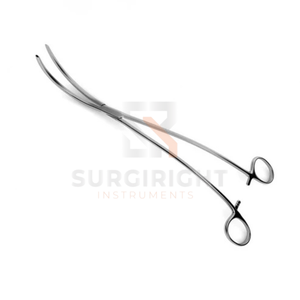
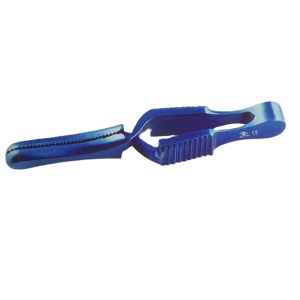
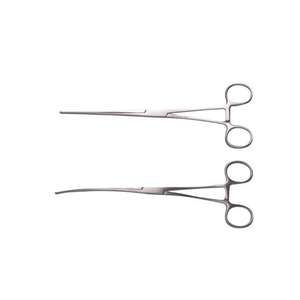
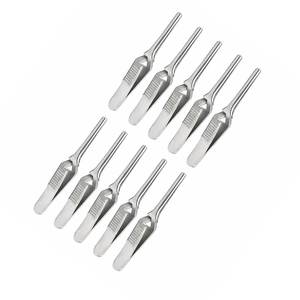
The global market for surgical instruments is undergoing a technological renaissance driven by advancements in minimally invasive surgery (MIS), micro-vascular procedures, and robot-assisted operating platforms. Within this ecosystem, surgical scissors represent one of the most critical handheld instrument categories, where micro-geometry, edge sharpness retention, tactile response, and corrosion resistance directly influence patient outcomes and procedural efficiency.
China has consolidated its position as a dominant global manufacturing hub for surgical scissors, transitioning from high-volume standardized forging to high-precision CNC wire-EDM cutting, automated vacuum heat treatment, and specialized micro-grinding. Leading Chinese OEM/ODM factories supply tier-1 medical brand owners, hospital purchasing consortia, and distributor networks across Europe, North America, the Middle East, and Asia-Pacific.
This industry report provides procurement officers, hospital CSSD (Central Sterile Services Department) managers, and medical device brand owners with an exhaustive technical roadmap for evaluating, sourcing, and verifying medical-grade surgical scissors and hemostatic vascular clamps manufactured in China.
The performance of any surgical scissor or clamp depends primarily on its alloy composition. Premier Chinese manufacturers utilize certified high-grade martensitic and austenitic stainless steels imported from Germany (e.g., Z40C13 / DIN 1.4034), Japan (SUS420J2, SUS440C), or domestically sourced high-purity medical alloys meeting ASTM F899 standards.
Surgical scissors demand high carbon content for edge retention alongside precise chromium proportions to form a dense, passive chromium oxide ($Cr_2O_3$) layer. The primary grades used in elite manufacturing include:
| Steel Alloy Grade | Material Standard | Hardness (HRC) | Corrosion Resistance | Primary Surgical Application |
|---|---|---|---|---|
| AISI 420A / 420B | DIN 1.4021 / 1.4028 | 48 - 52 HRC | High | General Operating Scissors, Iris Scissors, Utility Shears |
| AISI 420C (German Stainless) | DIN 1.4034 / 1.4035 | 52 - 55 HRC | Very High | Mayo Scissors, Metzenbaum Scissors, Micro-vascular Clamps |
| AISI 440C / High-C Martensitic | DIN 1.4125 | 56 - 59 HRC | Moderate to High | SuperCut Micro Scissors, Bone Shears, Tungsten Carbide Substrates |
| Tungsten Carbide (TC Inserts) | WC-Co Composite | 70 - 75 HRA Equivalent | Exceptional | Gold-Handle Long-Life Scissors, Heavy Tissue Cutting |
| Titanium Alloy (Ti-6Al-4V) | ASTM F136 | 36 - 42 HRC | Absolute (Non-Magnetic) | Neurosurgical Micro-Scissors, MRI-Compatible Vascular Clamps |
Modern surgical procedures frequently specify two advanced cutting enhancements:
Leading Chinese factories operate integrated, multi-stage production routes compliant with ISO 13485:2016 quality management systems. Understanding this process allows buyers to evaluate supplier competency during technical audits.
Certified steel rods are drop-forged in dies aligned with the grain flow of the final scissor blade, ensuring maximum structural integrity against flex stress.
Box locks, screw joints, ratchet teeth, and blade profiles are milled on 5-axis CNC platforms and wire-cut to tolerances within ±0.01 mm.
Computer-controlled vacuum furnaces harden and temper blades without surface oxidation, achieving consistent inter-crystalline stability.
Master craftsmen adjust scissor tension, align tips, cut serrations, and hand-hone cutting edges to guarantee uniform cutting action along the entire blade length.
Ultrasonic cleaning followed by chemical passivation strips free iron from the surface, enhancing the chromium oxide layer to prevent pitting under steam sterilization.
Fiber laser systems engrave Unique Device Identification (UDI) data matrix codes, lot numbers, and logos, followed by 100% optical alignment inspection.
Medical device procurement directors and healthcare purchasing networks are shifting away from traditional transactional buying toward strategic risk-mitigated partnerships. Key industry trends transforming surgical scissor procurement include:
Environmental sustainability directives and hospital waste reduction programs across the European Union and North America have spurred renewed interest in reusable surgical instruments. High-performance surgical scissors certified for 1,000+ steam sterilization cycles (134°C / 2.1 bar) offer a significantly lower Total Cost of Ownership (TCO) compared to single-use plastic-handled alternatives.
Diamond-Like Carbon (DLC) physical vapor deposition (PVD) coatings represent the forefront of surgical surface engineering. DLC coatings reduce friction coefficients to below 0.1, increase surface hardness beyond 2,500 HV, and reflect light minimally under bright surgical operating lamps, ideal for laparoscopic and ophthalmic procedures.
Global regulatory agencies—including the US FDA, European EUDAMED, and China NMPA—require high-density UDI laser etching on reusable instruments. Modern Chinese factories provide pre-registered GS1-compliant UDI codes direct from the factory line, streamlining hospital inventory tracking and CSSD workflow integration.
Derived from decades of specialized instrument manufacturing, our production ecosystem combines precision engineering with strict international compliance to deliver dependable surgical tools worldwide.
Direct technical answers from our engineering and export departments addressing common buyer inquiries.
For surgical scissors, high-carbon martensitic stainless steel such as AISI 420C or AISI 440C (52–56 HRC) is essential to preserve edge sharpness. For non-cutting hemostatic vascular clamps, AISI 410 or 420A is preferred as it delivers superior ductility and toughness, allowing ratchets and box locks to flex repeatedly without fracturing under tension.
Yes. Leading manufacturers provide turnkey OEM/ODM services including fiber laser marking of customer logos, customized SKU/catalog references, GS1-compliant UDI data matrix codes, custom color-anodized titanium handles, and bespoke retail or sterile-barrier packaging designs.
Importers should confirm that the manufacturing facility operates under an audited ISO 13485:2016 Quality Management System. For European distribution, Class I reusable surgical instruments require CE marking under EU MDR 2017/745, an appointed EC REP (Authorised Representative), and EUDAMED device registration. For the US market, FDA establishment registration and device listing are required.
Standard catalog instruments generally carry a trial MOQ starting from 10 to 50 pieces per pattern. Standard repeat production orders ship within 15 to 25 working days. Custom OEM patterns requiring new die forging or specialized tooling typically require 4 to 6 weeks for sampling and initial article inspection (FAI).
Instruments undergo rigorous testing including boil testing (ASTM F1089) and copper sulfate testing to verify passivation quality. Reusable lines are passivated and electro-polished to endure repeated steam sterilization cycles at 134°C for 18 minutes without pitting, staining, or hinge binding.