 Surgical · Dental · Precision Instruments Surgical · Dental · Precision Instruments
 Certified Surgical-Grade Stainless Steel • ISO 13485:2016 Compliant • CE Class I Registered
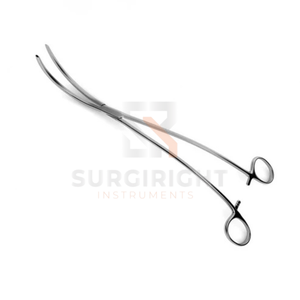
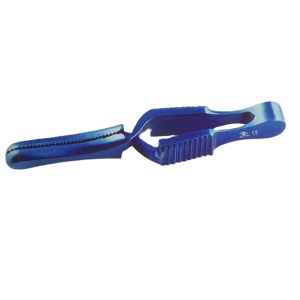
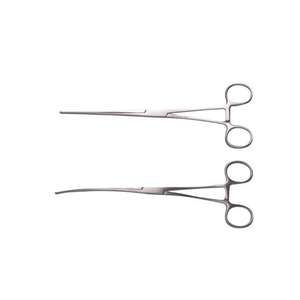
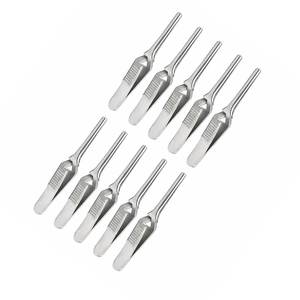
Evaluating Metallurgical Metallurgy, Jaw Dynamics, Surface Passivation, and Regulatory Compliance
In high-stakes gastrointestinal and colorectal surgeries, instrument metallurgy dictates clinical success. Leading OEM/ODM intestinal forceps factories utilize premium martensitic stainless steels (AISI 410, 420, and 440) alongside austenitic AISI 304/316 grades. Martensitic alloys undergo precise vacuum heat treatment, achieving optimal hardness (Rockwell HRC 42–48). This guarantees that spring tension, ratchet locking mechanisms, and jaw alignment endure thousands of repeated autoclave cycles without yielding to structural fatigue or stress corrosion cracking.
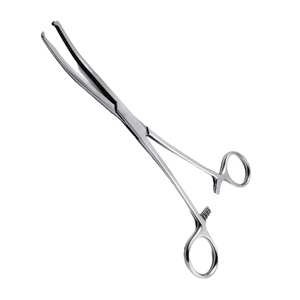
Intestinal clamping requires delicate pressure distribution to minimize mucosal ischemia and tissue trauma during resection and anastomosis. Advanced OEM manufacturing integrates fine longitudinal serrations, DeBakey-style atraumatic teeth, and flexible spring shanks (such as in Dennis, Mayo-Robson, or Doyen intestinal forceps). By engineering specific jaw pressure gradients, certified factories ensure firm occlusive clamping for hemostasis and lumen occlusion while safeguarding delicate intestinal walls against pressure necrosis.
To resist aggressive chemical disinfectants and pressurized steam sterilization at 134 °C, every intestinal forceps undergoes multi-stage ultrasonic cleaning and electrochemical citric passivation. This critical process removes free surface iron particles, producing a continuous, ultra-thin chromium oxide passive layer (ASTM A967 compliant). OEM options include non-reflective satin finishes, anti-glare matte black PVD coatings, and gold-plated handles to signify tungsten carbide (TC) reinforced jaws.
Operating from Sialkot's Renowned Medical Instrument Manufacturing Cluster
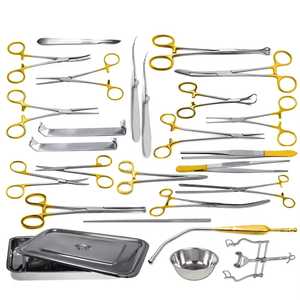
As a recognized industry benchmark, S.S. SURGIMED operates a vertically integrated production facility in Sialkot, Pakistan. Combining traditional master craftsmanship refined over generations with modern CNC machining, automated box-lock milling, and high-precision laser welding, our manufacturing infrastructure delivers unparalleled consistency across over 3,000 surgical instrument patterns.
Certified surgical steel bars undergo drop forging into instrument blanks. Grain flow patterns are strictly aligned along the jaw axis to maximize torsional resistance and mechanical shear strength.
Box locks, shanks, and ratchet teeth are CNC-milled to tight dimensional tolerances (±0.02mm), ensuring wobble-free hinge articulation and silky-smooth clamping action.
Thermal processing takes place in computer-controlled vacuum furnaces followed by deep sub-zero stabilization. Hardness profiles are verified via Rockwell testing for guaranteed functional longevity.
Instruments receive high-contrast fiber laser marking for corporate branding, catalog ref codes, LOT numbers, and 2D DataMatrix Unique Device Identification (UDI) to meet EU MDR & US FDA requirements.
Standard Parameters for Custom Intestinal Forceps & Surgical Clamps Orders
| Technical Parameter | Manufacturing Standard / Specification |
|---|---|
| Raw Material Options | German / Japanese Stainless Steel (AISI 410, 420A/B/C, 440), Titanium Alloy, AISI 304/316 L |
| Hardness Specification | Rockwell C (HRC) 42–48 (Jaws & Shanks); HRC 58+ for Tungsten Carbide Inserts |
| Jaw Configurations | Atraumatic DeBakey Serrations, Longitudinal Ribs, Diagonal Serrations, Smooth Occlusive Jaws |
| Surface Finishes | Electro-Polished Satin Matte, High Mirror Polish, Non-Reflective PVD Black, Titanium Anodized Colors |
| Sterilization Standard | Steam Autoclavable up to 134 °C (273 °F); Compatible with ETO & Gamma Sterilization |
| Quality Management Systems | ISO 13485:2016 Certified QMS, ISO 9001, CE Mark Class I, EUDAMED Registration, FDA Ready |
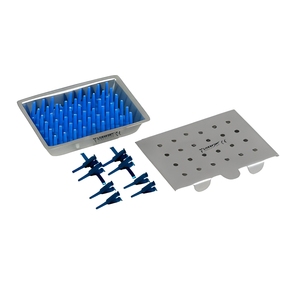
| Private Labeling & OEM | Fiber Laser Marking (Logo, Reference, LOT, UDI Code), Custom Packaging (Blister, Pouch, Kit Trays) |
| Sample & Lead Times | Trial Orders: 10 pcs/pattern; Production: 15–25 Working Days; OEM Sampling: 4–6 Weeks |
Navigating Market Shift, Technology Integration, and Regulatory Consolidation (2025–2030)
As minimally invasive surgical (MIS) techniques expand globally, hospital procurement centers are prioritizing intestinal forceps with hybrid handle geometries. Advanced OEM factories are re-engineering classical patterns like Allen, Kocher, and Mayo-Robson with lightweight ergonomic shanks and reduced closure force mechanisms to mitigate surgeon hand fatigue during lengthy laparoscopic and open rectal resections.
Regulatory frameworks, including the EU Medical Device Regulation (MDR 2017/745) and US FDA Unique Device Identification mandates, are accelerating vendor consolidation. Overseas buyers are gravitating toward established OEM factories with fully documented Technical Files, authorized EC REP representation, and EUDAMED registration. Facilities offering complete raw material batch traceability stand as clear market leaders.
While single-use surgical instruments gained traction in outpatient clinics, environmental sustainability goals and central sterile supply department (CSSD) cost-efficiency are shifting hospital purchasing organizations back to high-grade, reusable surgical forceps. Vacuum-heat-treated, corrosion-passivated instruments backed by lifetime functional warranties present a dramatically lower Total Cost of Ownership (TCO).
Clear Technical and Commercial Guidance for Import Managers and Hospital Buyers
We primarily forge intestinal forceps from high-grade German and Japanese surgical martensitic stainless steels, such as AISI 420A, 420B, and 440, tailored for functional jaws, delicate hinges, and ratchets. Non-cutting components and holloware utilize austenitic AISI 304/316 steel. Each steel heat batch is supplied with an official mill test certificate verifying chemical composition and mechanical integrity.
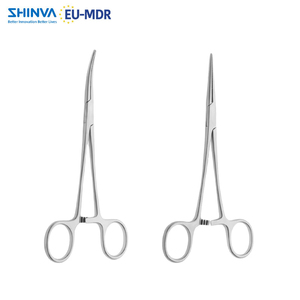
Atraumatic intestinal forceps (such as Dennis or Doyen patterns) feature specialized jaw serrations (e.g., DeBakey longitudinal ribs) and engineered spring flex. This design distributes closing forces evenly across fragile visceral walls to prevent mucosal tearing and ischemic injury during bowel resection. In contrast, standard hemostats utilize aggressive transverse serrations intended for absolute vessel crushing.
Our comprehensive OEM program includes precision fiber laser marking of custom logos, catalog part numbers, and UDI 2D DataMatrix barcodes. Additionally, we provide custom jaw profile modifications, titanium color anodizing, satin/matte anti-reflective surface finishing, custom blister packaging, multilingual IFUs, and private label box printing.
Our quality management system is certified to ISO 13485:2016 and ISO 9001 standards. Our Class I surgical instruments carry the CE mark with valid EC Representative (EC REP) coverage and full EUDAMED registration. Every shipment is accompanied by a Certificate of Conformity, Raw Material Analysis Report, Passivation Certificate, and Free Sale Documentation.
For standard catalog instrument patterns, trial orders start as low as 10 pieces per pattern. Repeat volume production orders ship within 15 to 25 working days. Custom OEM patterns requiring initial tooling, sampling, and first article inspection (FAI) typically require 4 to 6 weeks from initial drawing sign-off.
All reusable instruments undergo automated ultrasonic degreasing, high-temperature vacuum heat treatment, sub-zero stabilization, and electrochemical citric passivation. This builds an impervious passive chromium oxide layer. Reusable instruments are certified for steam sterilization cycles up to 134 °C and are backed by a lifetime functional guarantee against manufacturing defects.
Partner with a certified medical device manufacturer. Access full pattern catalogs, technical blueprints, sample orders, and direct OEM pricing today.