 Surgical · Dental · Precision Instruments Surgical · Dental · Precision Instruments
 Engineered to ISO 13485:2016 and CE standards for extreme thermal, chemical, and surgical endurance.
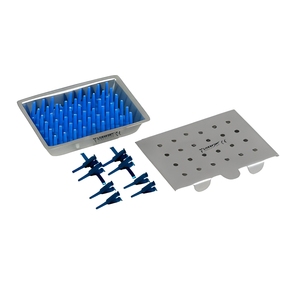
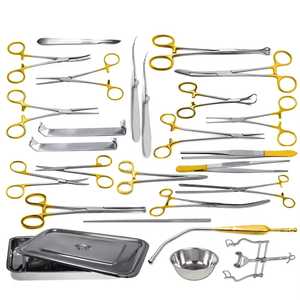
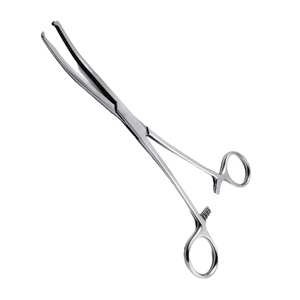
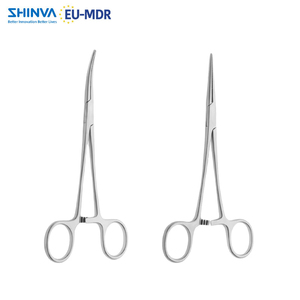
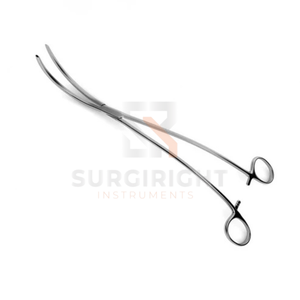
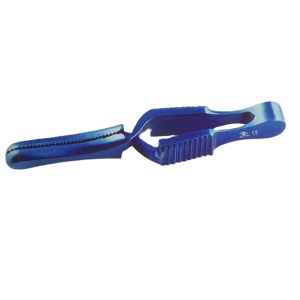
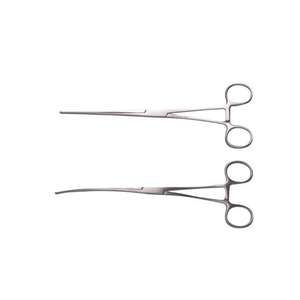
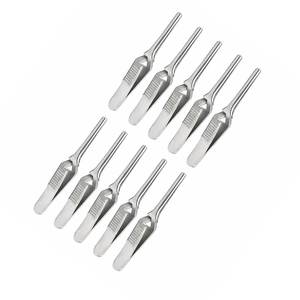
In modern scientific research, pharmaceutical manufacturing, chemical synthesis, and clinical surgical environments, laboratory tongs and mechanical holding clamps represent fundamental extensions of operator precision. Selecting a qualified lab tongs manufacturer and factory requires evaluating complex material science parameters including thermal threshold endurance, corrosion resistance under aggressive reagent exposure, tensile yielding, and ergonomic tip alignment.
This technical report delivers comprehensive procurement insights for hospital group purchasing organizations (GPOs), scientific lab distributors, and medical device importers seeking high-purity, vacuum-heat-treated stainless steel laboratory tongs and surgical clamps.
Laboratory tongs, beaker clamps, crucible holders, and surgical hemostatic clamps undergo grueling chemical and mechanical stress. The structural integrity of these tools is dictated by the alloy matrix and heat treatment regimen employed during manufacturing.
To assist procurement managers in validating factory specifications, the following engineering matrix summarizes standard alloy characteristics used across surgical clamp and lab tong manufacturing:
| Alloy Grade | Composition Standard | Hardness (HRC) | Thermal Threshold | Primary Application |
|---|---|---|---|---|
| AISI 420 German Grade | 12-14% Cr, 0.15-0.40% C | 50 - 54 HRC | Up to 450°C | Hemostatic Clamps, Micro Vascular Forceps, Precision Tongs |
| AISI 316L Stainless Steel | 16-18% Cr, 10-14% Ni, 2-3% Mo | 20 - 25 HRC | Up to 850°C | Chemical Flask Tongs, Beaker Clamps, Acid Handling Tools |
| High-Temp Alloy / Nickel Steel | High Ni-Cr Matrix | 30 - 35 HRC | Up to 1200°C | Crucible Tongs, High-Heat Furnace Extraction Clamps |
| Titanium Grade 5 (Ti-6Al-4V) | 6% Al, 4% V, Bal Ti | 36 - 39 HRC | Up to 600°C | MRI-Safe Lab Tongs, Ultra-Lightweight Non-Magnetic Tools |
Global manufacturing of scientific laboratory tongs and surgical clamps is concentrated within specialized industrial clusters known for precision metallurgy and skilled artisanship. Understanding these key regions enables supply chain leaders to balance cost, quality compliance, and OEM capabilities.
Represented by industry leaders like S.S. Surgimed, Sialkot manufactures over 60% of the world's reusable hand instruments. Offering German-grade raw steel processing, low labor overheads, and ISO 13485 / CE certification, Sialkot is the global epicenter for OEM private labeling.
Renowned for premium surgical instruments and ultra-high-end laboratory equipment. German manufacturers set the benchmark for micro-tolerances and proprietary alloy formulations, though at significantly higher price points.
American facilities focus heavily on customized robotic laboratory handling tools, automated clamp integrations, and specialty aerospace laboratory devices with strict ASTM traceability.
Specializing in high-volume, cost-competitive single-use plastic and standard 201/304 steel lab equipment, catering to educational institutions and basic chemical handling facilities.
Distinguished by exquisite micro-edge finishing and ultra-precise box-lock construction, Japanese facilities excel in micro-surgical clamps and high-purity semiconductor laboratory tools.
Focused on high-specification clinical research laboratory gear, bespoke containment clamps, and cleanroom-certified stainless steel handling equipment.
The global scientific laboratory apparatus market is shifting dramatically driven by automation, regulatory stringency, and sustainability demands. B2B buyers should anticipate the following technical trends when structuring multi-year procurement contracts:
A. Unique Device Identification (UDI) & Direct Part Marking (DPM): Regulatory bodies including the US FDA and EU EUDAMED require 2D Data Matrix laser etching directly onto reusable instruments. This enables automated tracking through sterilization cycles, maintenance protocols, and inventory audits.
B. Ergonomic & Anti-Fatigue Geometry: Modern research environments demand tongs and clamps engineered to minimize repetitive strain injuries (RSI). Curved handle profiles, spring-loaded auto-return mechanisms, and lightweight hollow-frame construction are rapidly becoming baseline requirements.
C. Advanced Non-Stick Fluoropolymer Coatings: To facilitate seamless cleaning when handling sticky resins, biological tissues, or molten polymers, manufacturers are incorporating plasma-bonded PTFE and ceramic coatings that withstand autoclaving while eliminating surface adhesion.
D. Closed-Loop Sustainable Manufacturing: Leading suppliers are implementing eco-passivation systems, closed-loop water filtration during grinding, and 100% recyclable stainless steel sourcing to help global healthcare and research organizations meet Scope 3 ESG targets.
Operating from the heart of Sialkot’s instrument manufacturing zone, S.S. Surgimed provides an unmatched combination of traditional forging skill and modern numerical control machining. Every pair of laboratory tongs, vessel clamp, or hemostatic forcep manufactured in our facility undergoes rigorous multi-stage verification.
Whether you require standard surgical patterns or custom OEM laboratory clamps engineered to specialized drawings, our engineering team delivers turnkey manufacturing with full regulatory documentation support.
Direct technical answers from our engineering and export documentation teams.