 Surgical · Dental · Precision Instruments Surgical · Dental · Precision Instruments
 Explore our export-grade surgical instruments engineered with German & Japanese AISI martensitic stainless steel for cardiovascular, neurosurgical, ophthalmic, and general procedures.
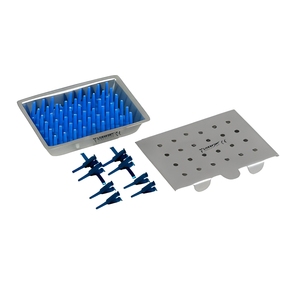
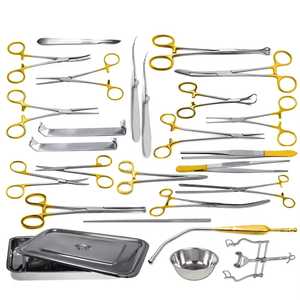
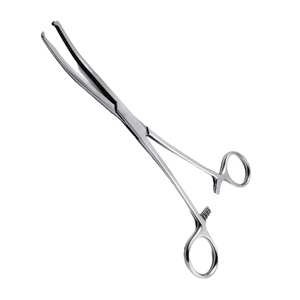
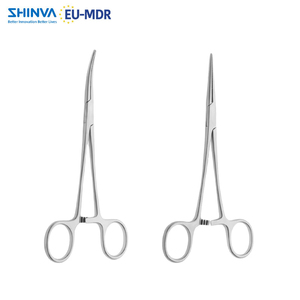
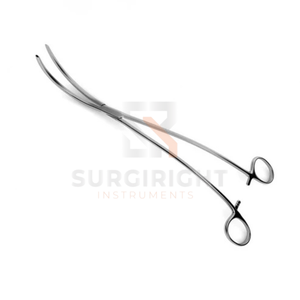
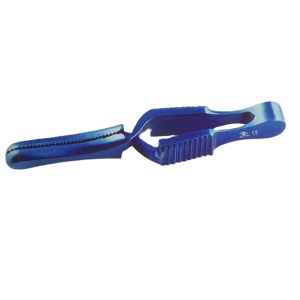
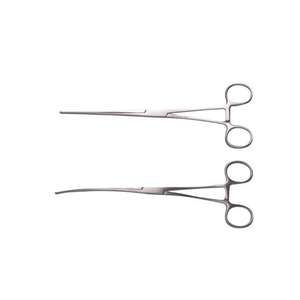
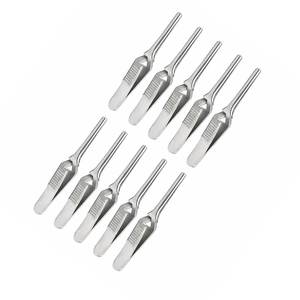
In modern operating theaters, surgical retractors and tissue spreaders represent the critical mechanical foundation for surgical site visualization, patient safety, and operative efficiency. As global healthcare systems expand and minimally invasive procedures evolve alongside complex open surgical interventions, the procurement demand for high-grade surgical instruments has intensified. Overseas healthcare procurement departments, Group Purchasing Organizations (GPOs), and medical device brand owners face a complex global sourcing matrix. While traditional European production centers maintain historic prestige, qualified manufacturing hubs in China and specialized industrial clusters such as Sialkot have developed world-class industrial ecosystems capable of delivering identical metallurgical standards, micrometric precision, and full regulatory compliance at optimized cost structures.
Understanding the operational infrastructure of leading China surgical retractors factories requires evaluating the entire value chain—from raw steel forging and computer numerical control (CNC) milling to manual craft alignment, vacuum heat treatment, citric passivation, and laser-engraved UDI tracking. Modern surgical retractor manufacturing is no longer a simple metal-working process; it is an exact metallurgical and bio-engineering discipline governing tensile strength, fatigue resistance, anti-corrosion passivity, and tactile ergonomics for surgeons.
The structural integrity and surgical lifespan of any retractor, clamp, or tissue spreader depend fundamental on material selection and heat treatment engineering. Inferior steel alloys succumb to stress corrosion cracking, jaw misalignment, or micro-pitting after repeated steam autoclave cycles at 134°C. Our manufacturing protocol enforces rigid material purity controls and certified heat lot tracking:
Forged exclusively from imported German and Japanese surgical martensitic stainless steel (AISI 410, 420, and 440) for functional working blades, ratchets, and cutting edges. Non-cutting handles, holloware, and tray assemblies utilize high-purity austenitic AISI 304/316 steel with mill test certificates per heat batch.
Hardening and tempering are conducted inside computer-controlled vacuum furnaces followed by cryogenic stabilization. Rockwell hardness (HRC 48-54 depending on instrument pattern) is 100% verified to guarantee ratchet spring tension, anti-yield strength, and dimensional stability under load.
Instruments undergo ultrasonic degreasing, electro-polishing, and automated chemical citric passivation. This treatment removes free iron particles from surface layers, creating a resilient chromium oxide passive film that guarantees immunity against pitting, rust, and chemical staining during CSSD reprocessing.
Every surgical instrument pattern manufactured in our production ecosystem passes through an explicit 8-Stage Production Route:
| Production Stage | Technical Process Description | Quality Assurance Benchmark |
|---|---|---|
| 01. Forging & Blanking | Closed-die drop forging of certified stainless steel billets aligning grain flow to blade geometry. | Spectrographic alloy composition verification & blank density check. |
| 02. Precision CNC Milling | Multi-axis CNC machining of box locks, ratchets, screw seats, and serrated tissue teeth. | Micrometric dimensional tolerance verification within ±0.02mm. |
| 03. Manual Fitting & Setting | Hand-crafting by senior artisans to align retractor arms, balance spring tension, and dress joint pivots. | 100% smooth action and zero-play jaw closure validation. |
| 04. Vacuum Heat Treatment | Atmosphere-free thermal hardening followed by controlled multi-stage tempering cycles. | HRC Rockwell hardness batch testing with micro-structure analysis. |
| 05. Grinding & Surface Finishing | Precision hand grinding, deburring, and application of satin, mirror, or matte anti-glare finishes. | Visual surface defect inspection under 10x magnification. |
| 06. Chemical Passivation | Multi-bath ultrasonic immersion and citric acid passivation to form chromium oxide layer. | Boil test & copper sulfate corrosion resistance verification (ASTM F1089). |
| 07. Laser Marking & UDI | High-contrast fiber laser marking of brand logos, catalog reference numbers, LOT, and GS1 UDI matrix. | Optical reader scan rate test & barcode readability check. |
| 08. Final Inspection & Pack | Final functional testing, cleaning, individual pouch/blister sealing, and export packaging. | AQL 1.0 sampling inspection prior to release for shipping. |
As operating rooms adopt digital integration, robotic assistance, and stringent infection control protocols, B2B buyers must align their procurement strategies with several transforming technological trends in surgical retraction:
The engineering focus of top surgical retractor manufacturers has expanded beyond basic mechanical hold-back functions to specialized tissue-sparing and micro-atraumatic blade designs. Surgical trauma during tissue retraction can lead to postoperative ischemic necrosis, nerve stretch injuries, and prolonged patient recovery times. Modern retractor designs address these clinical challenges through advanced biomechanical engineering:
Atraumatic Blade Contours & Beveled Edges: Premium retractor blades feature radiused, hand-polished anatomical edges that distribute retraction pressure uniformly across muscular and vascular structures. In vascular and micro-neurosurgery, bulldog clamps and temporary vessel retractors utilize DeBakey-style interlocking fine serrations that grip delicate vessel walls securely without crushing the endothelial lining.
Constant-Force Spring & Ratchet Mechanisms: Self-retaining retractors (such as Gelpi, Weitlaner, and Beckman-Weitlaner patterns) incorporate refined double-pivot box locks and precision-cut ratchet teeth. This ensures incremental lock engagement, allowing surgeons to fine-tune retraction width while preventing sudden mechanical slippage or spring fatigue during prolonged procedures.
Key technical, regulatory, and commercial answers for hospital procurement officers, medical distributors, and private-label buyers.
We forge surgical retractors and clamps using certified medical-grade martensitic stainless steel alloys such as AISI 410, AISI 420, and AISI 440. These alloys provide high tensile strength and superior edge holding for structural blades and ratchets. Non-blade structural components, holloware, and sterilizing trays are fabricated from corrosion-resistant austenitic AISI 304 or 316 stainless steel. Every raw material shipment arrives with full mill test certification verifying chemical composition and mechanical properties.
Our quality management system is fully certified under ISO 13485:2016 and ISO 9001. All Class I reusable and single-use surgical instruments are CE marked in compliance with EU Medical Device Regulation (MDR 2017/745), backed by an appointed European Authorized Representative (EC REP) and registered within the EUDAMED database. Each bulk shipment includes Declarations of Conformity, Material Inspection Certificates, Citric Passivation Cleanliness Reports, and Certificate of Free Sale (CFS).
Yes, comprehensive OEM and private label production programs are central to our manufacturing operations. We offer precision fiber laser marking of custom client brand logos, specialized catalog numbers, LOT batch identifiers, and 2D GS1 UDI DataMatrix codes. Furthermore, we support customized packaging solutions, including color-coded anodizing for titanium instruments, custom sterile barrier pouch packaging, branded rigid boxes, and custom Instructions for Use (IFU) printing.
For standard catalog instrument patterns, trial orders start at an accessible minimum order quantity of 10 pieces per pattern. Standard repeat production batches are completed and shipped within 15 to 25 working days. For custom OEM designs or new pattern forging dies, production lead times typically range from 4 to 6 weeks, which includes rapid 3D prototyping, sample forging, optical CMM dimensional inspection, and first-article approval.
All reusable surgical instruments undergo rigorous ultrasonic cleaning, electro-polishing, and chemical citric passivation, rendering them fully autoclavable and capable of enduring repeated steam sterilization cycles at 134°C (273°F) without pitting, rusting, or joint binding. We provide a lifetime functional guarantee covering material defects, joint malfunction, and manufacturing workmanship for all reusable surgical instrument lines.
Navigating international surgical instrument procurement requires balancing cost optimization with strict quality control. By maintaining total vertical control over raw material forging, precision CNC machining, heat treatment, manual craft assembly, and regulatory documentation, our factory ecosystem bridges the gap between competitive Asian manufacturing efficiencies and rigorous European quality expectations.
Whether you are establishing a new private-label line of specialized retractors, upgrading hospital group purchasing contracts, or seeking reliable OEM capacity for cardiovascular and orthopedic instrument sets, our engineering and export support teams deliver technical transparency, batch consistency, and guaranteed functional reliability.