 Surgical · Dental · Precision Instruments Surgical · Dental · Precision Instruments
 Direct Factory Supply for Riyadh Healthcare Institutions, Dental Centers & Medical Equipment Importers
Empirical evidence of metallurgical durability, quality control, and regional supply leadership
An Industry Benchmark Analysis for Procurement Directors & Chief Dental Officers in Riyadh
In modern clinical periodontics and oral surgery across the Kingdom of Saudi Arabia, the mechanical performance of handheld scaling instruments and specialized surgical clamps directly dictates patient outcomes and procedural efficiency. Dental scalers, curettes, and hemostatic clamps undergo extreme cyclic mechanical stress, chemical exposure during enzymatic pre-cleaning, and high-temperature steam sterilization cycles (134 °C at 2.1 bar pressure).
To prevent premature tip dulling, edge pitting, or stress-corrosion cracking (SCC), premier OEM factories utilize premium-grade martensitic stainless steels, primarily AISI 410, AISI 420, and AISI 440C for working tips and cutting edges. Austenitic grades such as AISI 304 and AISI 316L are reserved for ergonomic hollow handles, cassette trays, and non-cutting shanks due to their superior ductility and corrosion resistance.
"Information Gain Benchmark: Unlike generic hand tools, CE Certified dental scalers produced under ISO 13485:2016 undergo computer-controlled vacuum heat treatment followed by cryogenic stabilization. This metallurgical process yields a micro-structural lattice capable of holding a sub-micron tactile edge while resisting intergranular corrosion in high-salinity oral environments."
The vacuum heat treatment cycle elevates the steel's core hardness to 50–56 HRC (Rockwell Hardness C-Scale). This precise thermal envelope strikes an optimal balance between hardness (edge retention during dense subgingival calculus removal) and toughness (preventing brittle fracture when lateral working pressure is applied against root surfaces).
The modern Riyadh dental clinic relies on a dual-approach hygiene workflow: high-frequency ultrasonic piezoceramic scaling coupled with delicate manual scaling and root planing. While magnetostrictive and piezoelectric scalers operate at frequencies between 25 kHz and 42 kHz for rapid calculus cavitation, hand-crafted stainless steel scalers (such as Sickle Scalers, Jaquette Scalers, and Gracey Curettes) remain indispensable for detailed root surface debridement and tactile feedback in deep periodontal pockets (>5mm).
| Engineering Attribute | Standard Commercial Scaler | S.S. Surgimed Medical Grade |
|---|---|---|
| Steel Origin & Grade | Standard AISI 410 Steel | German & Japanese AISI 420/440C |
| Thermal Processing | Atmospheric Heat Treatment | Vacuum Hardening + Cryogenic Tempering |
| Surface Passivation | Basic Nitric Acid Dip | ASTM A967 Citric Passivation + Electropolish |
| Tactile Edge Radius | 12 – 15 Microns | 3 – 5 Microns (Precision Sharpened) |
| Sterilization Threshold | 500 Cycles before degradation | 2,000+ Autoclave Cycles Guarantee |
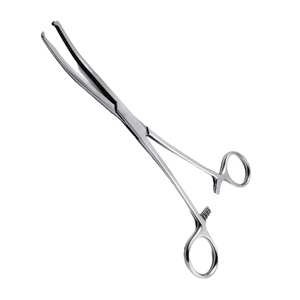
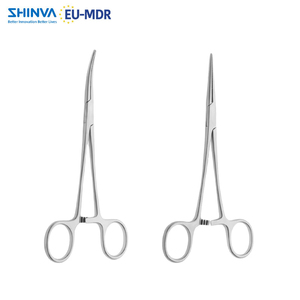
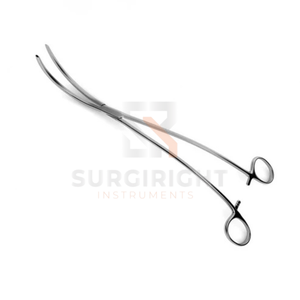
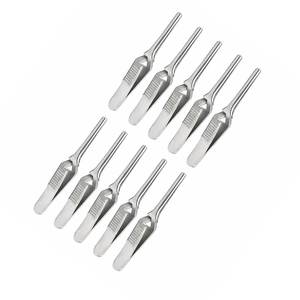
Furthermore, micro-vascular clamps and tissue forceps utilized in maxillofacial and plastic surgery within Riyadh's specialized medical cities require precise jaw alignment (box lock tolerances within ±0.02mm) to ensure atraumatic tissue handling without vascular crush injury.
Custom-Tailored Solutions for Kingdom-Specific Clinical Environments & Institutional Protocols
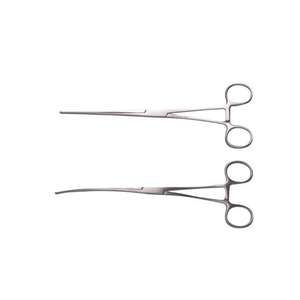
In high-throughput surgical complexes such as King Faisal Specialist Hospital & Research Centre (KFSHRC) and King Fahad Medical City (KFMC), surgical clamps and dental scalers undergo back-to-back CSSD reprocessing cycles. Our citric-passivated stainless steel prevents surface staining and micro-pitting under rigorous enzymatic washer-disinfector cycles.
From luxury dental hubs in Al Olaya and King Fahd Road to rapidly expanding polyclinics in Al Malqa and An Nakheel, private practices require custom-branded, color-coded, and laser-etched scaler kits that reinforce patient trust and premium branding during periodontal procedures.
Riyadh’s desert climate presents unique humidity fluctuations in central sterile supply storage. Our electrochemical polishing process forms an impenetrable chromium-oxide passive layer (Cr₂O₃) that guards against atmospheric oxidation during long-term sterile pack storage.
How Modern Healthcare Privatization Is Transforming Dental & Surgical Device Sourcing
Under the ambitious umbrella of Saudi Vision 2030 and the Health Sector Transformation Program, the Ministry of Health (MOH) is actively restructuring healthcare delivery across the Kingdom. The corporatization of healthcare clusters (Health Clusters) alongside rapid expansion in private health insurance coverage has triggered unprecedented demand for internationally certified, high-grade dental and surgical instruments.
Procurement departments in Riyadh are transitioning away from uncertified low-cost alternatives toward trusted B2B OEM manufacturing partners capable of providing complete technical documentation, full material heat lot traceability, and compliance with the Saudi Food and Drug Authority (SFDA) Medical Device Interim Regulation.
To import and distribute dental scalers, hemostatic forceps, and surgical clamps in Riyadh, medical supply companies must align with rigorous regulatory metrics. S.S. Surgimed supports Riyadh distributors by providing fully compliant Class I device portfolios:
Combining Decades of Surgical Metallurgy Craftswork with Modern CNC Precision
Every dental scaler and surgical clamp starts as certified high-density steel forging blanks. Our in-house vacuum furnaces ensure total atmosphere control, preventing surface decarburization and delivering uniform hardness across complex blade geometries.
While CNC milling establishes microscopic consistency for box locks and serrations, master artisans perform hand-honing, ratchet engagement testing, and tip alignment under optical magnification to guarantee tactile perfection before final sterilization packaging.
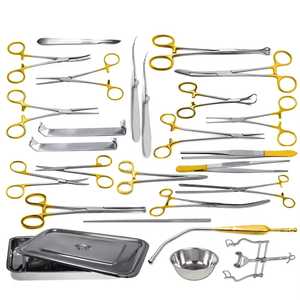
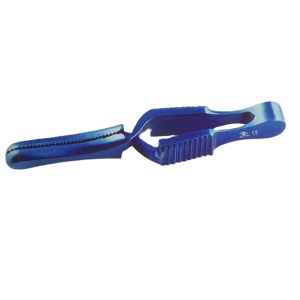
We empower Saudi medical distributors to establish their own proprietary brands. Our turnkey OEM services include custom laser marking of logos, SKU numbers, custom packaging, colored titanium coatings, and tailored kit configurations.
Direct Answers from Our Engineering & Global Regulatory Compliance Team
We forge our dental scalers and surgical cutting instruments from high-tensile German and Japanese martensitic stainless steel grades (AISI 420A/BB/C and AISI 440C), which provide optimal Rockwell hardness (50–56 HRC) for prolonged edge sharpness. Non-cutting structural components, handles, and holloware are fabricated from austenitic AISI 304/316L steel to ensure maximum ductility and chemical resistance.
All instruments undergo electro-polishing and ultrasonic cleaning followed by citric acid passivation per ASTM A967 standards. This chemical process removes free iron from the instrument surface, forming an impenetrable, self-healing chromium oxide layer capable of enduring repeated steam sterilization at 134 °C without pitting, discoloration, or rust.
We supply a comprehensive regulatory package including ISO 13485:2016 Certification, ISO 9001 Certification, CE Declaration of Conformity (Class I), EC Representative (EC REP) confirmation, EUDAMED registration proofs, Raw Material Mill Test Certificates, and Free Sale Certificates (FSC).
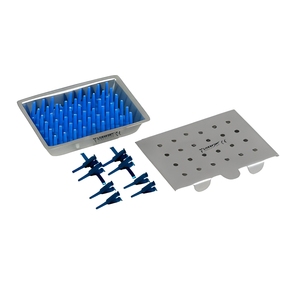
Yes. We offer complete OEM and Private Label production. We can laser-etch your company logo, custom part numbers, LOT numbers, and GS1 DataMatrix UDI barcodes directly onto the instruments. Furthermore, we provide customized sterilization tray cassettes and retail packaging tailored to your regional market branding.
For standard catalogue patterns, our trial order MOQ starts from just 10 pieces per pattern. Production runs ship within 15 to 25 working days. For custom OEM patterns or bespoke kit configurations, production including sample approval typically requires 4 to 6 weeks. Express air freight to Riyadh (RUH) or sea freight consolidation to Dammam/Jeddah is fully supported.
All reusable surgical and dental instruments manufactured by S.S. Surgimed carry a Lifetime Functional Guarantee against material defects, poor alignment, and manufacturing flaws under normal clinical usage and proper CSSD handling protocols.