 Surgical · Dental · Precision Instruments Surgical · Dental · Precision Instruments
 Precision-crafted exodontia and atraumatic tissue extraction tools designed for high-volume dental surgery clinics, general hospital theaters, and oral-maxillofacial trauma units across Iraq.
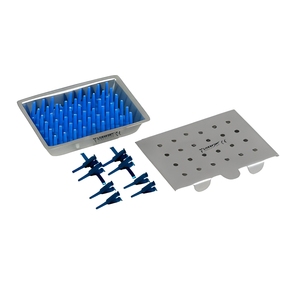
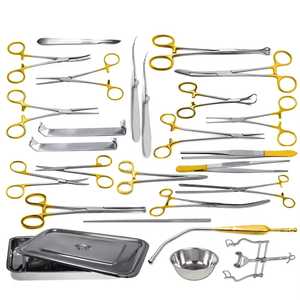
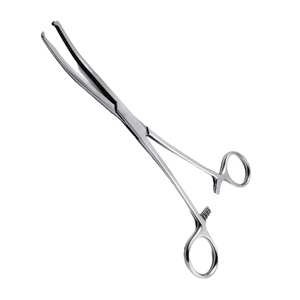
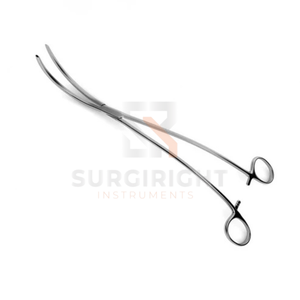
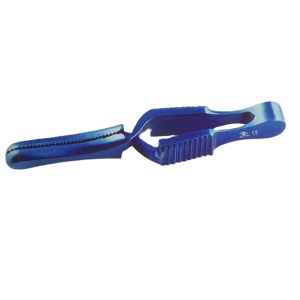
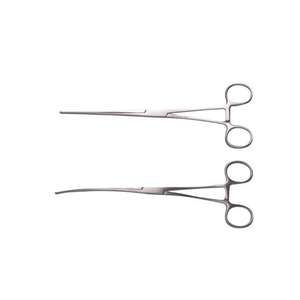
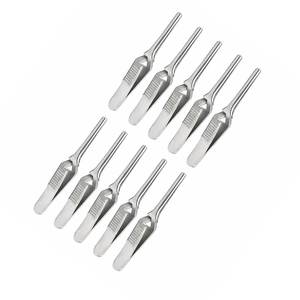
In modern exodontia and oral-maxillofacial surgery, the mechanical integrity of a root elevator directly dictates clinical outcomes. As an international manufacturing powerhouse operating out of Sialkot’s world-renowned surgical instrument cluster, S.S. Surgimed engineers root elevators specifically built to fulfill the exacting requirements of hospital tender boards, private dental clinics, and surgical distributors across the Republic of Iraq.
The Iraqi dental market—spanning major public health complexes like Baghdad Medical City, regional specialty centers in Erbil and Sulaymaniyah, and private clinics across Basra—presents unique clinical demands. Surgeons in these environments require elevators that deliver high torsional resistance, precise tactile feedback, and absolute passivation against ambient atmospheric moisture and heavy steam-autoclave cycles.
Information Gain Insight: Unlike standard surgical grade steel, our proprietary heat-treatment process subjects AISI 420B and AISI 440A martensitic stainless steel to vacuum furnace hardening at 1,050°C followed by controlled sub-zero cryogenic stabilization. This prevents micro-fissure formation along the working tip, allowing Iraqi oral surgeons to execute high-torque levering actions without risking tip shear or irreversible flex deformation.
Root elevators function on three core mechanical principles: the First-Class Lever, the Wheel-and-Axle, and the Wedge. A failure in elevator design typically stems from improper force distribution across the working blade, leading to accidental alveolar bone fracturing or root tip displacement into the maxillary sinus.
Hardened in vacuum chambers to 50-54 HRC Rockwell hardness, preventing blade bending and dulling under intense physical stress.
Electropolished and chemical-dipped in nitric/citric acid baths to form an impenetrable anti-corrosive chromium oxide surface barrier.
Lightweight hollow-core handles engineered with hollow hex grooves reduce surgeon hand fatigue during prolonged surgical interventions.
A critical gap in general surgical purchasing in the Middle East is the confusion between austenitic (300 series) and martensitic (400 series) stainless steel. While AISI 304/316 steel is optimal for non-cutting holloware, surgical trays, and retractor frames due to high ductility, it is entirely unsuitable for root elevators due to its low yield strength under shear stress.
At S.S. Surgimed, our root elevator blades are forged exclusively from high-carbon martensitic stainless steel (AISI 420B / AISI 440A). This specific alloy composition provides the ideal balance between hardness, tensile strength, and edge retention, ensuring that even under severe rotational forces within dense mandibular cortical bone, the working tip retains its geometric integrity.
| Technical Parameter | S.S. Surgimed Elevator Specification | Standard Market Competitor | Clinical Advantage in Iraq Market |
|---|---|---|---|
| Steel Grade | German/Japanese AISI 420B & 440A Martensitic Stainless | Generic AISI 410 or Low-Carbon Steel | Zero tip deformation; superior corrosion resistance |
| Hardness Index | 50 – 54 HRC (Rockwell Hardness C) | 40 – 44 HRC | Maintains sharp luxation edges over thousands of uses |
| Handle Structure | Hollow-core Ergonomic Hexagonal / Anatomical Grip | Solid Heavy Round Steel | Significantly reduced fatigue during back-to-back surgeries |
| Passivation Method | ASTM A967 Ultrasonic Nitric & Citric Passivation | Standard Manual Acid Dip | Protects against micro-pitting caused by hard water sterilizers |
| Autoclavability | 134°C Thermo-Disinfection / Steam Autoclave Compliant | Degrades after 20-30 high-temp steam cycles | Full lifetime functional guarantee against manufacturing defects |
| UDI Tracking | Laser Etched UDI Data Matrix & Lot Traceability Code | Unmarked / Generic Silk Screen | Compliant with Iraqi Ministry of Health (Kimadia) tenders |
The procurement landscape for surgical and dental instruments in Iraq is bifurcated into large-scale public sector tenders managed via the Ministry of Health (MoH / Kimadia) and a rapidly expanding private clinical network centered in major urban metropolises. S.S. Surgimed’s direct manufacturing workflow addresses the specific pain points encountered in both operational environments.
In public facilities such as Al-Yarmouk Teaching Hospital in Baghdad or Al-Sadr Teaching Hospital in Basra, surgical tools are subjected to non-stop clinical rotation. Central Sterile Supply Departments (CSSD) in these high-volume public hospitals process hundreds of surgical trays daily. Key environmental considerations include:
Due to historical regional conflicts and high traffic accident rates along major transport corridors, Iraqi oral-maxillofacial surgeons frequently manage complex facial trauma cases, impacted ankylosed root fragments, and bone-fused teeth. In these specialized procedures:
Standard luxators fail when attempting to mobilize deeply embedded apex tips. S.S. Surgimed’s modified Cryer and Apexo elevators feature reinforced shank shoulders, providing surgeons with the leverage confidence needed to elevate deeply impacted root fragments without risking mechanical fracture.
The autonomous Kurdistan Region and major commercial centers in southern Iraq have seen a surge in high-end aesthetic, implantology, and modern dental clinics. Private practitioners demand premium aesthetics, ergonomic handling, and complete color-coded kit configurations (such as Black Plasma or Titanium Coated Luxators) that project high clinical sophistication to patients.
Navigating the medical device market in Iraq requires an understanding of evolving purchasing behaviors, regulatory frameworks, and technological transitions occurring throughout the Middle East.
Iraqi dentists are rapidly moving away from aggressive forceps extractions toward atraumatic root elevation to preserve buccal bone plates for immediate dental implant placement.
Rather than procuring individual pieces, hospital purchasing agents prefer pre-configured 10-piece or 12-piece elevator trays in autoclavable cassette boxes for streamlined inventory management.
Iraqi medical import agencies are bypassing third-party European traders to partner directly with certified Sialkot manufacturers for OEM branding and customized pricing structures.
By establishing direct supply corridors from our manufacturing facility in Sialkot, Pakistan, to key Iraqi entry hubs—including Umm Qasr Port for maritime freight and Erbil International Airport / Baghdad International Airport for expedited air cargo—S.S. Surgimed provides Iraqi buyers with unbeatable lead times, full regulatory compliance, and unmatched factory-direct pricing.
For decades, Sialkot has stood as the global capital of surgical instrument manufacturing. At S.S. Surgimed, we blend generations of master hand-craftsmanship with state-of-the-art German CNC machining technology, setting the benchmark for precision surgical production.
Every single root elevator exported to Iraq passes through a rigorous multi-stage manufacturing protocol inside our ISO-certified plant:
Detailed responses from our export logistics and technical teams regarding procurement, shipping, compliance, and custom ordering for the Iraq market.
We forge our root elevator tips and shanks from imported German and Japanese surgical grade martensitic stainless steels, primarily AISI 420B and AISI 440A. These high-carbon alloys achieve a Rockwell Hardness of 50-54 HRC after vacuum heat treatment, providing exceptional edge retention and flexural strength. Non-cutting handles and sterilization cassettes utilize austenitic AISI 304 stainless steel for max corrosion resistance.
Yes. We provide complete OEM and private label manufacturing services for Iraqi medical distributors. We offer fiber laser etching of your company logo, custom catalog codes, LOT numbers, and UDI barcodes directly on the instruments. Furthermore, we design custom blister packaging, pouch packaging, and multilingual Instructions for Use (IFU) inserts in English and Arabic.
Our complete manufacturing management system is certified under ISO 13485:2016 and ISO 9001. All surgical instruments carry CE marking, full technical documentation, and Declarations of Conformity. We supply complete Certificates of Origin (legalized by commercial chambers), raw material spectro-analysis certificates, and sterilization reports required for smooth customs clearance through Iraqi ports and Kimadia registry approval.
For trial orders and smaller distributor requests, our Minimum Order Quantity (MOQ) starts at just 10 pieces per pattern. Air freight shipments to Erbil International Airport or Baghdad International Airport typically take 5 to 7 days from dispatch. Sea freight shipments destined for Umm Qasr Port arrive within 18 to 22 transit days. Standard order lead time is 15 to 25 working days depending on order volume.
Absolutely. Every reusable surgical instrument manufactured by S.S. Surgimed comes with a Lifetime Functional Guarantee against material defects, cracking, breakage, and premature corrosion when processed according to standard medical steam sterilization (134°C) protocols. Any instrument exhibiting manufacturing defects is immediately replaced free of charge.