Vascular Forceps and Clamps Factories & Exporter serving Netherlands
ISO 13485 Certified Surgical Precision | EU MDR (2017/745) Compliant | OEM & Direct Hospital Supply Solutions
Precision Vascular & Surgical Clamps Portfolio
Engineered specifically for micro-vascular, cardiovascular, general, and gastrointestinal surgical procedures. Manufactured from high-grade German and Japanese surgical stainless steel (AISI 410, 420, 316L) to ensure maximum corrosion resistance, optimal tactile feedback, and trauma-free occlusion.
Micro-Surgery Grade
Precision Micro Vascular Clamps Set (Neurosurgery & Plastic)
German stainless steel micro-clamps with calibrated atraumatic tension for neurovascular and reconstructive flap procedures.
Technical White Paper: Engineering Standards for Vascular Forceps and Clamps
In cardiovascular, thoracic, and reconstructive micro-vascular surgery, the mechanical integrity of vascular forceps and clamps directly influences clinical outcomes. The delicate balance between achieved arterial temporary occlusion and the avoidance of intimal hyperplasia or endothelial disruption requires rigorous metallurgical engineering and microscopic tolerance assembly.
As a dedicated original equipment manufacturer (OEM) and exporter supplying hospital procurement groups, medical equipment distributors, and surgical centers across the Netherlands (including key medical hubs in Amsterdam, Rotterdam, Utrecht, and Leiden), S.S. Surgimed manufactures instruments according to international ISO 7153-1 and ASTM F899 surgical steel standards.
1. Advanced Metallurgy & Heat Treatment
We utilize high-martensitic stainless steel grades such as AISI 410, AISI 420, and AISI 440A/B for cutting edges and clamping jaws, supplemented by austenitic AISI 316L for corrosion-critical components. Every forged blank undergoes computer-controlled vacuum heat treatment to achieve a Rockwell Hardness of 42 to 48 HRC, preventing spring tension fatigue over thousands of autoclave cycles.
2. DeBakey & Cooley Atraumatic Teeth
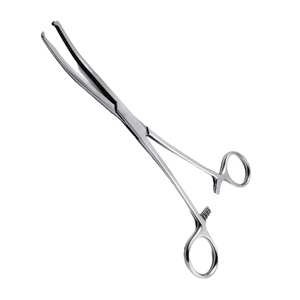
Traumatic clamping can result in crushing injuries to the vessel wall, leading to post-operative thrombosis. Our vascular clamps feature precision-machined DeBakey longitudinal serrations (1x2 interlocking rib configuration) and Cooley fine teeth, which grip delicate vascular structures with minimal, uniformly distributed radial clamping force.
3. Passivation & Surface Integrity
To withstand continuous exposure to saline, blood, and harsh automated washer-disinfector detergents in Dutch CSSD facilities (Centrale Steriele Apparaten Afdeling - CSA), all instruments undergo ultrasonic degreasing, electro-polishing, and nitric acid passivation to form a self-healing chromium oxide barrier.
Localized Application Scenarios in Dutch Healthcare Facilities
The Dutch healthcare system is globally renowned for high specialized standards, structured regional GPO (Group Purchasing Organization) networks, and strict quality control managed by the Dutch Healthcare and Youth Inspectorate (IGJ). Surgical instruments exported to the Netherlands must align with complex operational scenarios across academic medical centers, top-clinical teaching hospitals (STZ network), and specialized private clinics.
A. Academic Medical Centers (UMCs) & Cardiovascular Centers
Leading Dutch university medical centers, such as Amsterdam UMC, Erasmus MC Rotterdam, LUMC Leiden, and UMC Utrecht, specialize in complex thoracic aortic aneurysm repair, pediatric cardiac surgery, and living-donor kidney transplantations.
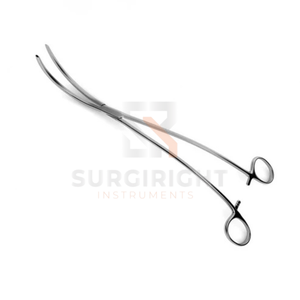
DeBakey Vascular Clamps (Straight, Angled, Curved): Crucial for cross-clamping the aorta during cardiopulmonary bypass with exact, non-slip occlusion.
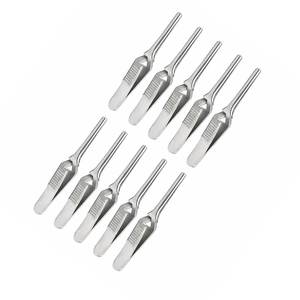
Titanium Micro-Vascular Forceps: Essential for ultra-fine micro-anastomosis in lymphatic and coronary bypass procedures.
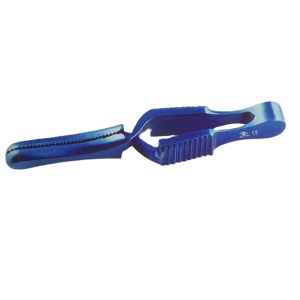
Bulldog Clips (Satinsky & Gregory types): Providing controlled local temporary occlusion during renal graft vessel alignment.
B. STZ Teaching Hospitals & Regional Surgical Outpatient Centers
The Netherlands' 26 STZ hospitals (Samenwerkende Topklinische Opleidingsziekenhuizen) handle high volumes of peripheral vascular interventions, arteriovenous (AV) fistula creation for hemodialysis patients, and varicose vein stripping.
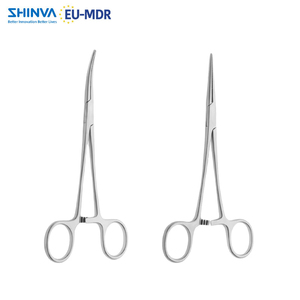
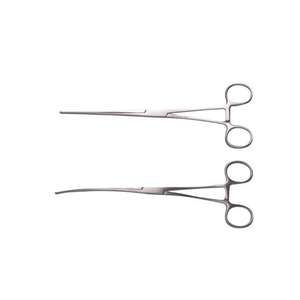
Kelly & Crile Hemostatic Forceps: High-frequency reliance for general hemostasis, tissue dissection, and vessel clamping in routine day-surgery.
Foss & Glover Anterior Resection Clamps: Preferred in laparoscopic and open colorectal surgical interventions across regional Dutch surgical suites.
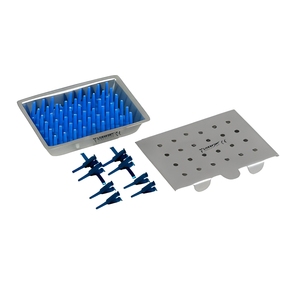
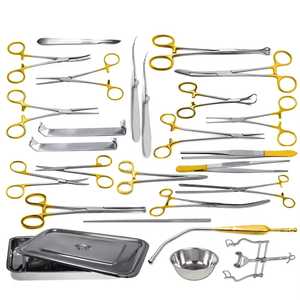
Single-Use / Reusable Custom Instrument Trays: Pre-packaged sets designed to streamline turn-around times in Dutch central sterilizing departments.
Localized Market Trends & Compliance Drivers in the Netherlands
Procurement strategies for surgical instruments in the Netherlands are undergoing a structural evolution driven by regulatory enforcement and environmental sustainability mandates:
1. Rigid Compliance with EU MDR (2017/745) & EUDAMED
The transition from MDD to EU MDR (Regulation 2017/745) requires every Class I and Class Ir (reusable surgical instrument) imported into the Netherlands to possess comprehensive technical documentation, full material chain-of-custody traceability, an authorized European Representative (EC REP), and a Unique Device Identifier (UDI) laser-etched directly on the instrument body. S.S. Surgimed provides complete regulatory compliance, including 2D Data Matrix UDI laser marking and EUDAMED registration.
2. "De Groene OR" (Green Operating Room) Sustainability Mandates
Dutch hospitals are actively participating in national healthcare sustainability programs ("Green Deals Zorg"). Medical directors are actively seeking to reduce clinical waste by transitioning from lower-grade disposable tools back to high-durability, multi-use, autoclavable surgical instruments capable of enduring 100+ sterilization cycles without corrosion or mechanical degradation.
Our Factory Capabilities & OEM Advantages
Headquartered in the premier surgical instrument manufacturing hub of Sialkot, Pakistan, S.S. Surgimed leverages decades of artisan craftsmanship combined with modern CNC precision engineering. Our integrated manufacturing facility handles every phase of production under certified ISO 13485:2016 and ISO 9001 quality management systems.
Stage 01
Forging & Blanking
Certified stainless steel bars are drop-forged into specialized tool blanks with aligned grain structure.
Stage 02
CNC Milling & Locking
Automated 5-axis CNC machining of box locks, ratchet teeth, and DeBakey serrations to exact drawings.
Stage 03
Vacuum Heat Treatment
Computerized vacuum furnaces harden and temper the steel, ensuring spring memory and edge retentivity.
Laser etching of OEM client logos, catalog SKUs, batch codes, and 2D Data Matrix UDI barcodes.
Stage 08
100% Inspection & Pack
Dimensional verification, boil testing for corrosion resistance, and sterile/non-sterile protective pouching.
Procurement & Importing FAQ for Dutch Medical Distributors
1. How does S.S. Surgimed support EU MDR (2017/745) compliance for importers in the Netherlands?
We provide a complete regulatory technical file for all our Class I and Class Ir surgical instruments. Our products are fully registered under EUDAMED, backed by an appointed European Authorized Representative (EC REP), and marked with high-precision UDI 2D Data Matrix codes. Dutch medical importers receive full Declarations of Conformity (DoC), material certificates, and biological safety evaluations with every shipment.
2. Which exact stainless steel grades are used for your vascular clamps and hemostats?
We exclusively forge our instruments using surgical-grade German and Japanese stainless steel alloys. Martensitic steels (AISI 410, 420, and 440) are used for working jaws, serrations, and cutting edges to deliver maximum hardness and wear resistance. Austenitic steels (AISI 304 and 316L) are utilized for handles, holloware, and non-stress structural components to guarantee superior corrosion resistance during steam autoclaving.
3. Can Dutch hospital procurement groups order customized OEM patterns or private labeling?
Yes. We offer turnkey OEM and private label services. We can custom-laser mark your hospital group logo, custom product reference numbers, lot tracking codes, and UDI data matrix directly onto the instruments. Customized packaging, instruction for use (IFU) inserts in Dutch/English, and custom kit assembly (e.g., dedicated vascular surgical trays) are fully supported.
4. What are the typical lead times and air/sea shipping routes to Schiphol or Rotterdam?
Standard production lead time for wholesale catalog items is 15 to 25 working days. For custom OEM patterns, sample approval typically takes 3 to 4 weeks, followed by full production. Air freight shipments to Amsterdam Airport Schiphol (AMS) deliver in 4 to 7 business days, while ocean freight container shipping to the Port of Rotterdam takes approximately 22 to 28 days.
5. What is the Minimum Order Quantity (MOQ) for trial orders and sample evaluation?
To accommodate evaluation procedures by clinical procurement boards and head surgeons in Dutch hospitals, we offer trial order flexibilities starting from as low as 10 pieces per instrument pattern. Pre-production physical samples are supplied rapidly for dimensional and ergonomic verification.
6. How are your instruments validated for repeated CSSD steam sterilization at 134°C?
Our reusable surgical range is passivated and electro-polished to build a dense, corrosion-resistant chromium oxide layer. Instruments are fully validated for repeated steam sterilization cycles at 134°C (273°F) in accordance with ISO 17664 requirements, protected by our comprehensive lifetime functional warranty against manufacturing defects.
Partner with a Certified Vascular Instruments Manufacturer
Streamline your medical instrument supply chain in the Netherlands with direct factory pricing, EU MDR regulatory assurance, and uncompromised surgical precision. Request a detailed factory quote or order evaluation samples today.
 Surgical · Dental · Precision Instruments